

For many years, my creative practice has centred on digital photomontage, using my own photographs to build imagined seascapes and landscapes. Although that process remains at the heart of my work, I have always been curious about painting and how it might influence the way I see landscape.
Several years ago, I began exploring paint through a sketchbook project. Rather than replacing my digital practice, it became another way to investigate colour, texture and composition. You can read more about how I developed my wider creative practice on my About page.
Looking back, I realise this project wasn’t really about becoming a painter. Instead, it was about understanding landscape in a different way. It encouraged me to slow down, experiment and embrace uncertainty. As with my digital photomontage work, I rarely know exactly where a piece will end up. That openness has become an important part of my creative process.
Learning Through Limitations
One of the biggest breakthroughs came when I discovered artist Louise Fletcher’s online painting course. The exercises were simple but thoughtfully designed to remove the pressure of producing finished paintings.
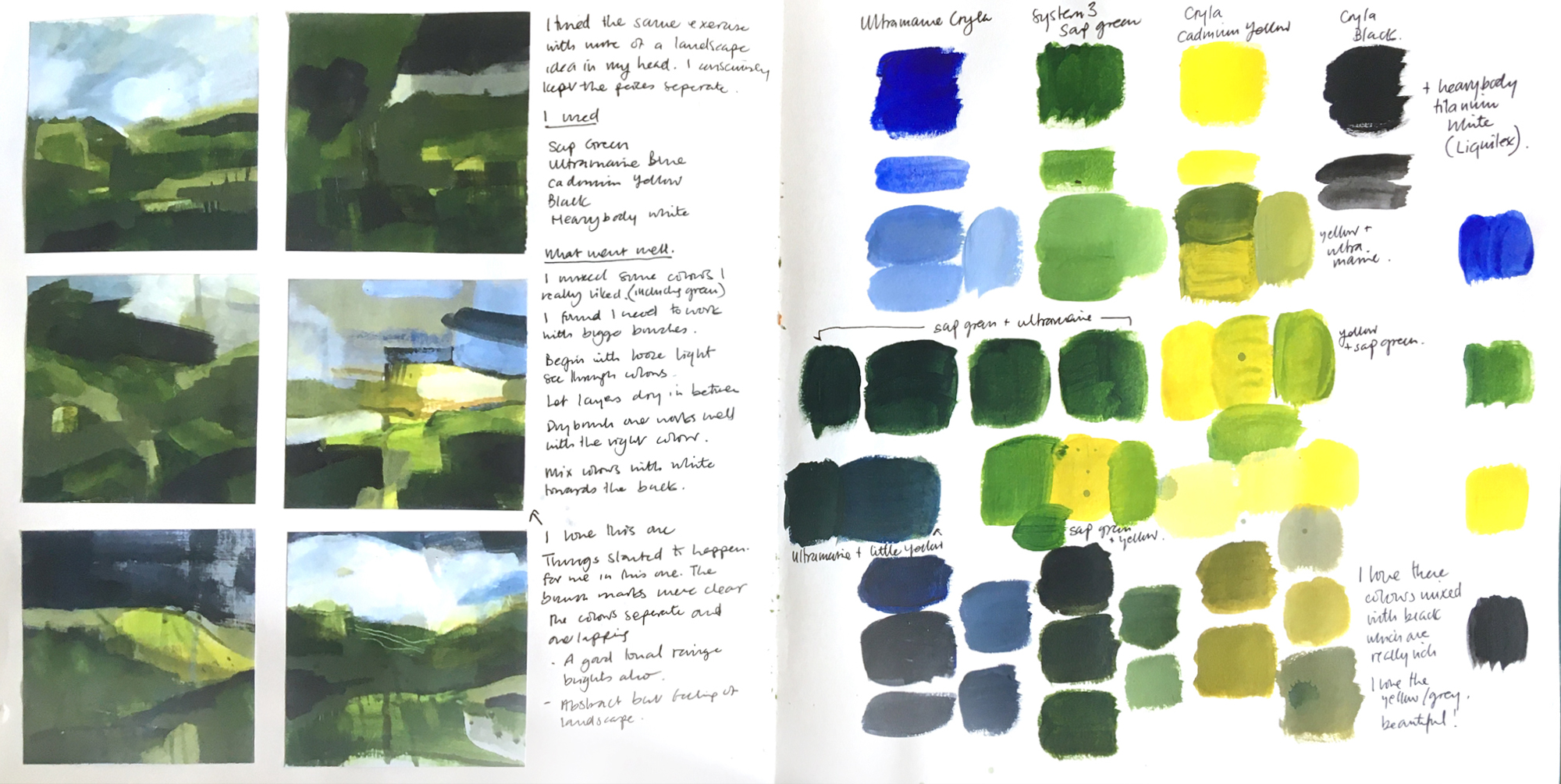
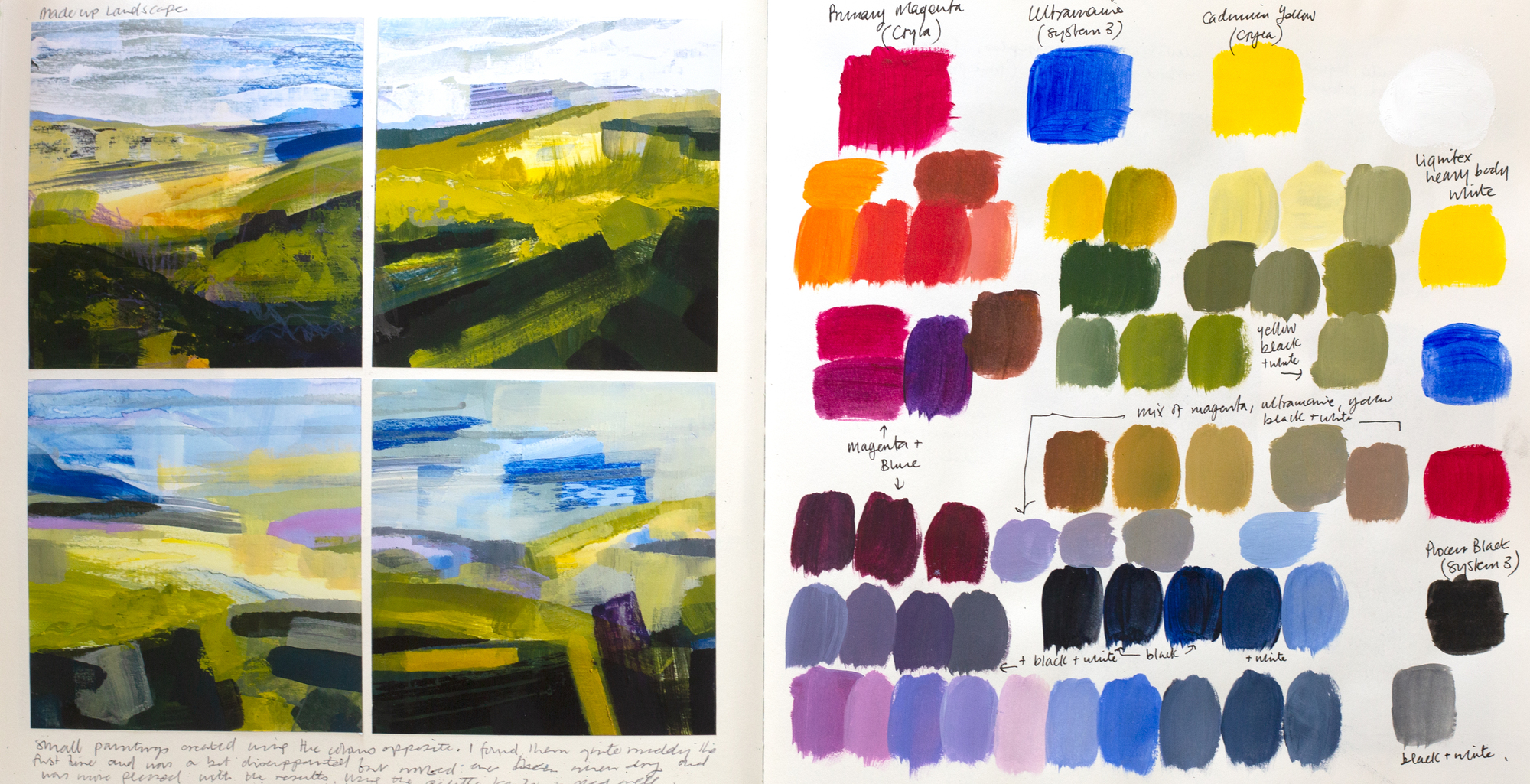
The first challenge involved working with a very limited colour palette. Immediately, the process felt less overwhelming.
Using only three colours, together with black and white, taught me several valuable lessons. Firstly, a surprisingly wide range of colours could be mixed from very few pigments. Secondly, every colour naturally worked together because they all shared the same origins. Finally, having fewer materials helped me focus on making rather than worrying about endless choices.
Interestingly, I still use this principle throughout my creative practice today. Whether I’m working with paint or building digital photomontages, limitations often lead to more thoughtful and cohesive work.
Exploring Colour and Composition
Another exercise involved masking six small squares onto a sheet of paper before painting freely across the entire surface.
Rather than concentrating on individual paintings, I responded instinctively to colour, movement and the feeling of landscape. Afterwards, peeling away the masking tape revealed six completely different compositions.
That sense of surprise fascinated me.
Consequently, I repeated the exercise many times, gradually discovering colour combinations and abstract arrangements that felt both balanced and atmospheric. These small studies became a safe place to experiment without worrying about whether a painting was successful.
More importantly, they reminded me that some of the strongest ideas appear when expectations are lowered.
STRUCTURE OF LANDSCAPE
Understanding the Structure of Landscape
As the project developed, I realised I didn’t fully understand why certain landscapes felt convincing.
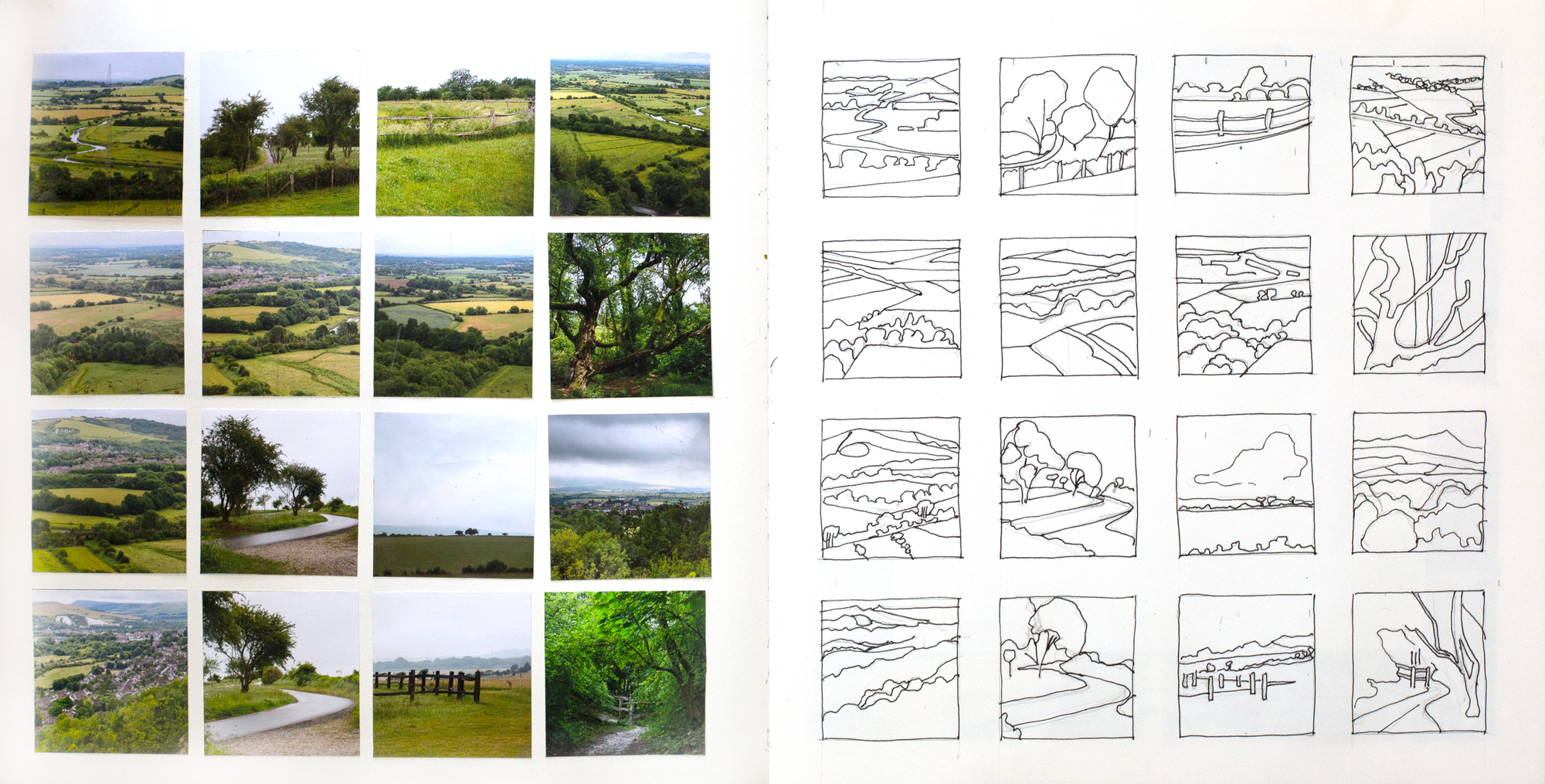
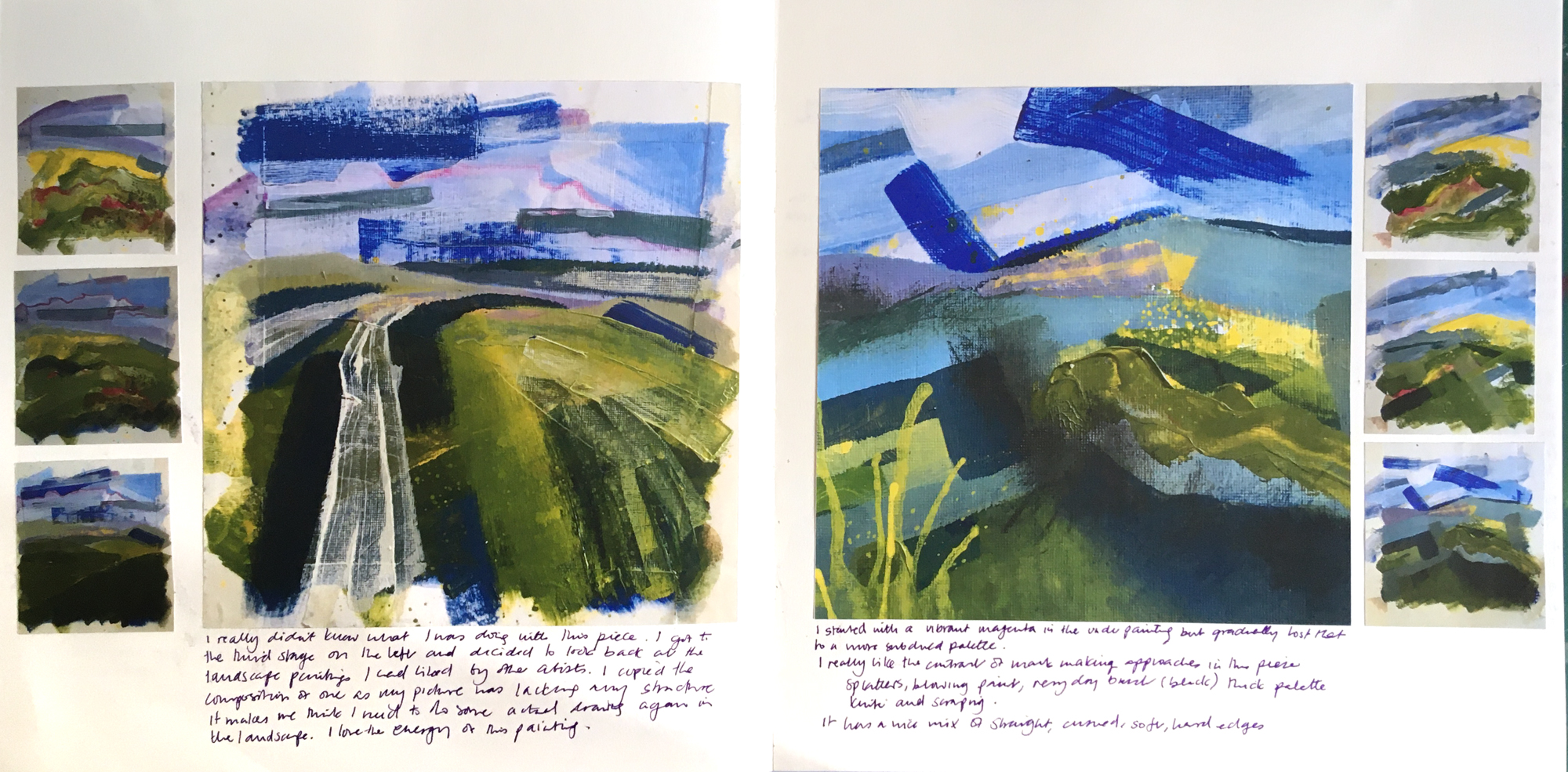
I knew that landscapes were layered, yet I wanted to understand how foreground, middle distance and background worked together visually. To explore this, I made quick thumbnail drawings from my own landscape photographs.
These simple sketches helped me notice relationships between shapes rather than individual details. Instead of copying what I could see, I began analysing how space was created through tone, proportion and rhythm.
Although this research began through painting, it has also influenced the way I construct my digital photomontage landscapes. I now think much more carefully about how the eye moves through an image and how different elements work together to create depth.
Discovering the Power of Mark Making
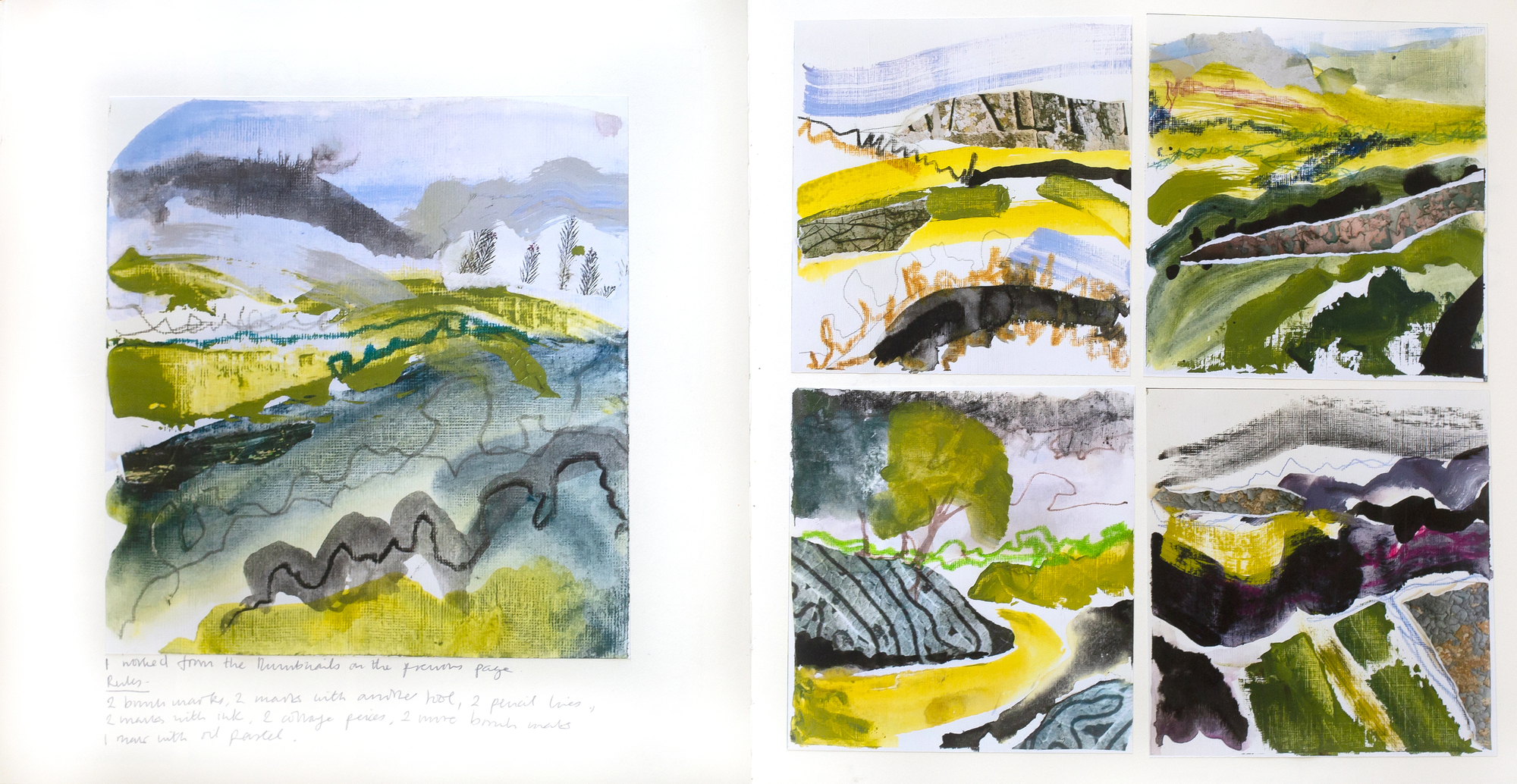
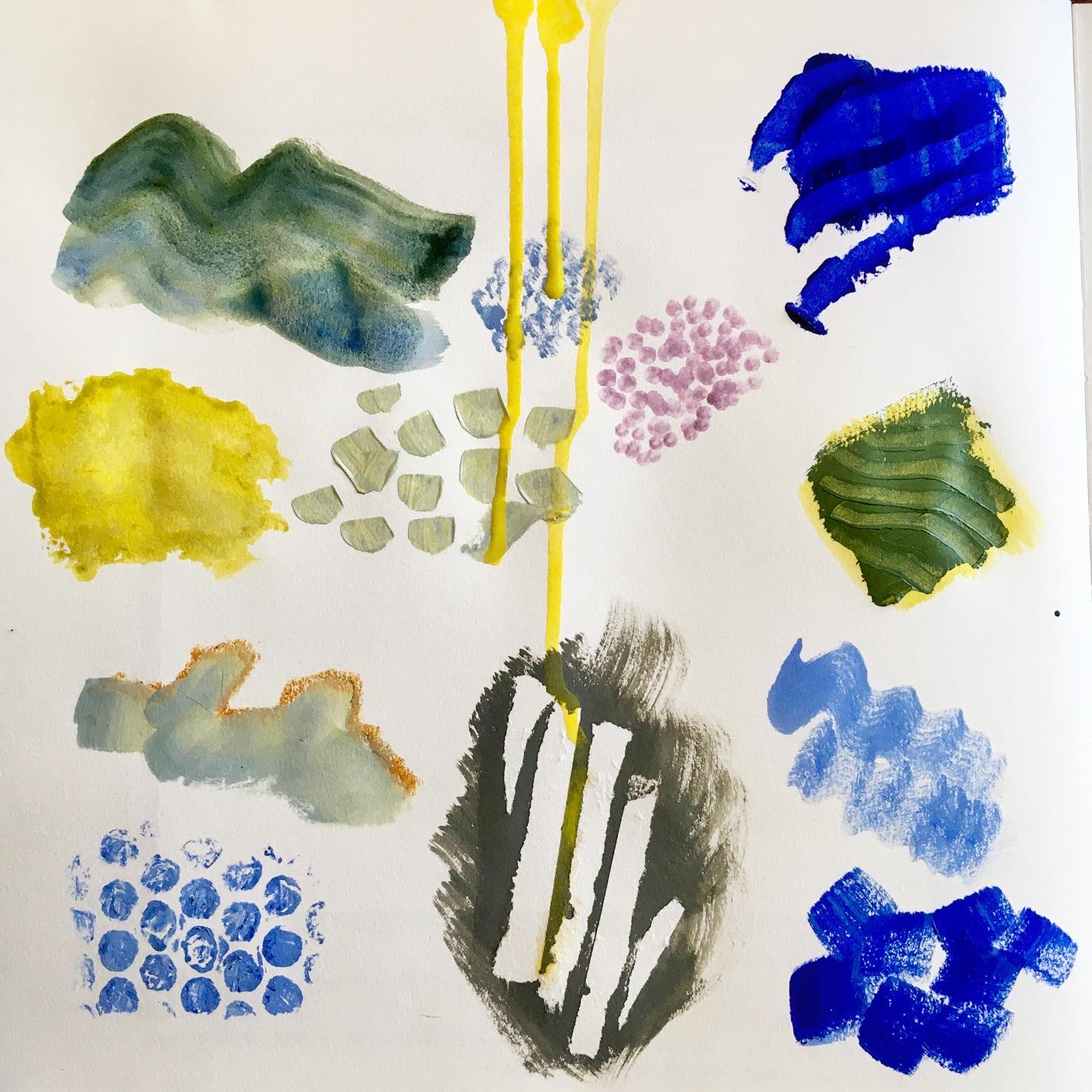
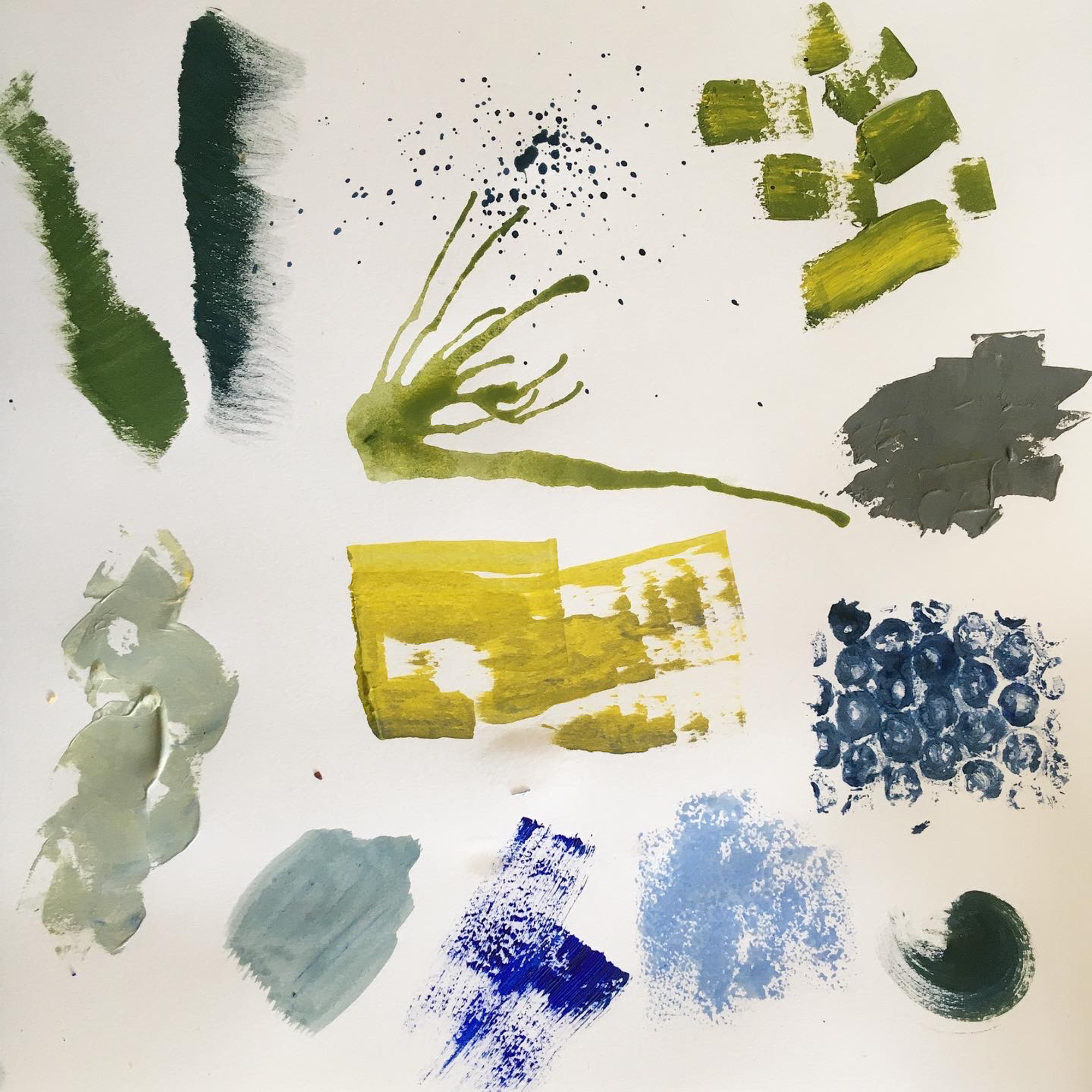
Further painting exercises encouraged me to work quickly using only a limited number of marks.
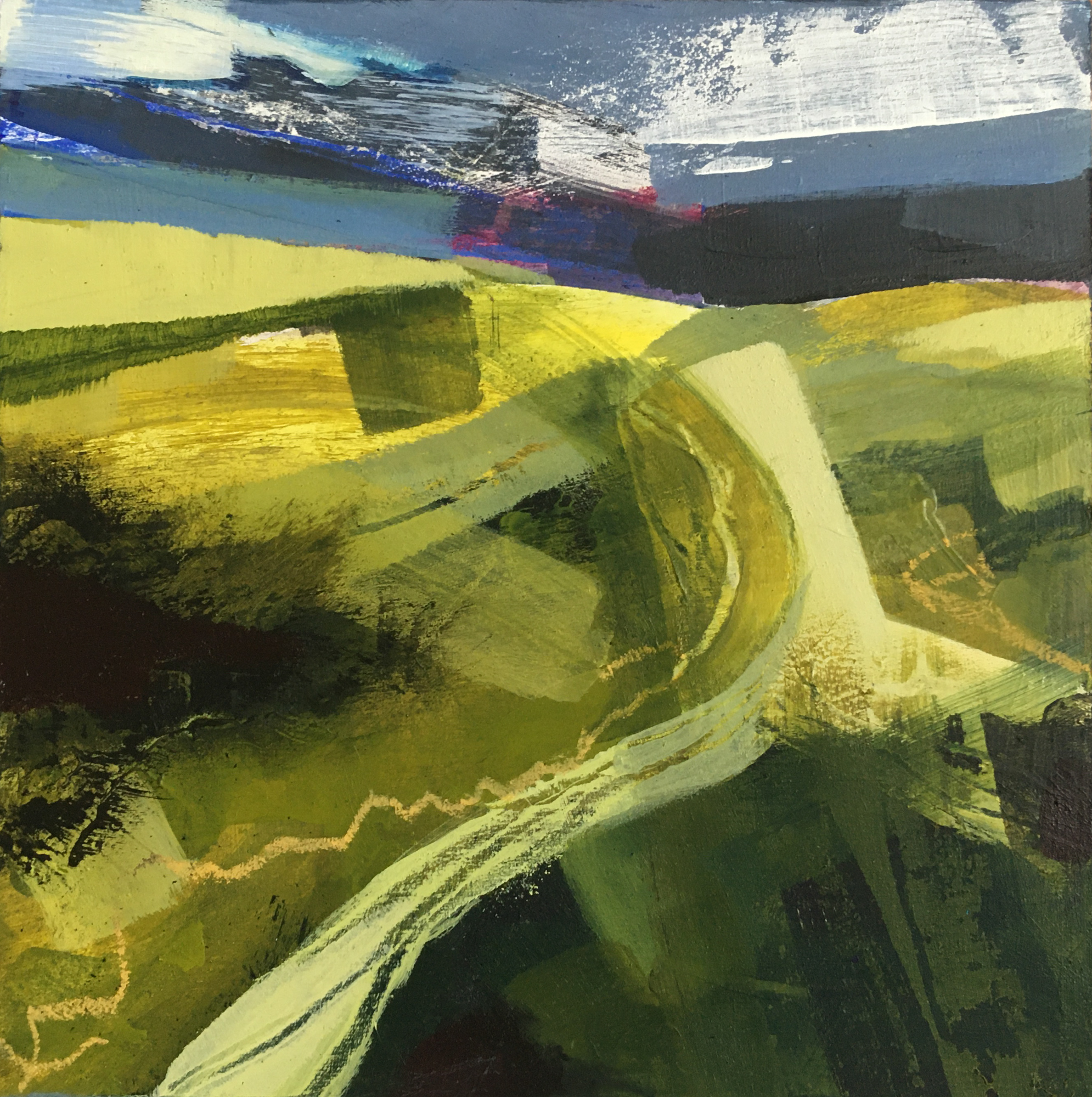
That restriction forced me to become more decisive. As a result, I began experimenting with scraping into wet paint, drawing with oil pastel before painting over the surface, and creating textures with pieces of cardboard.
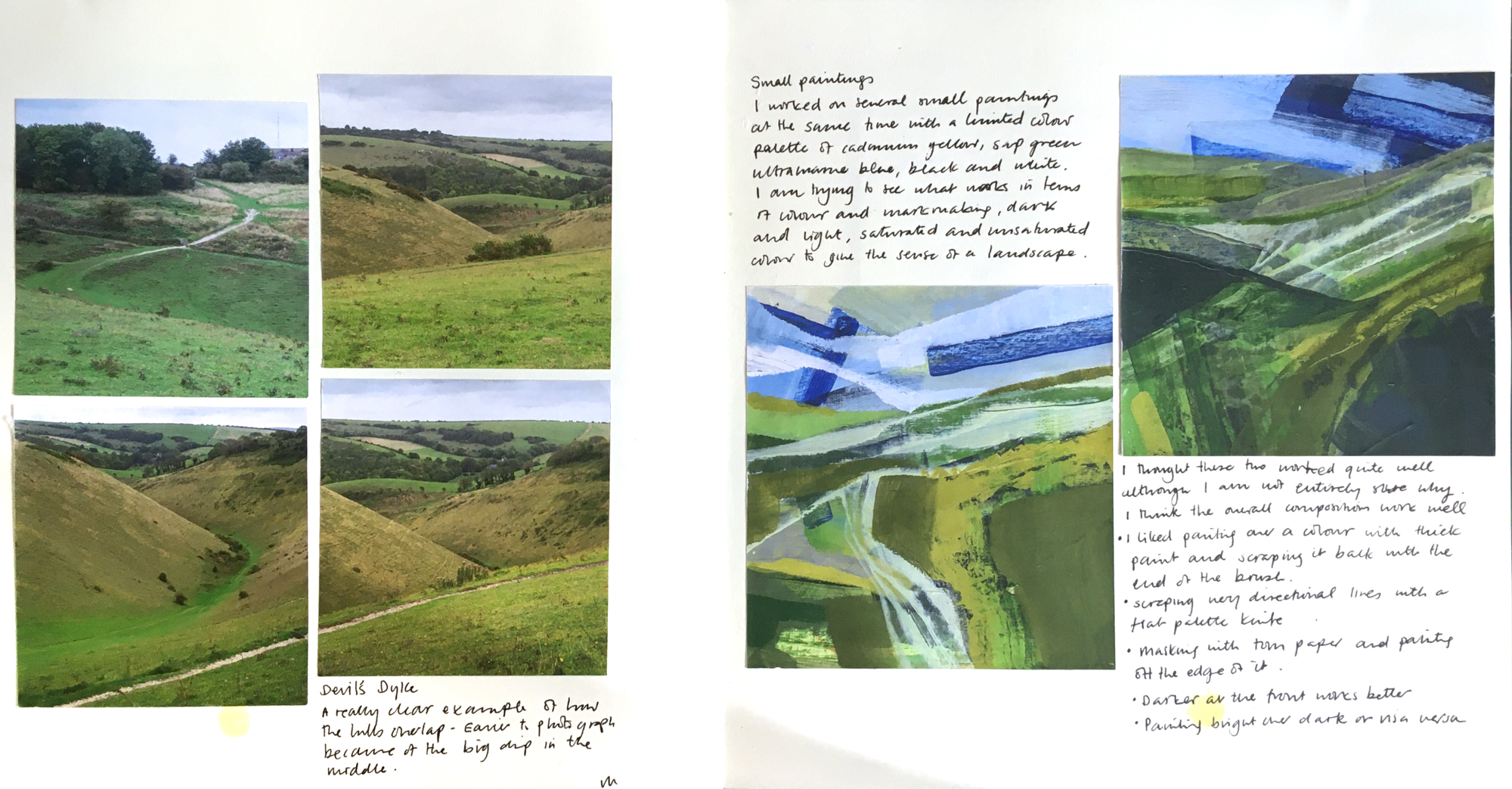
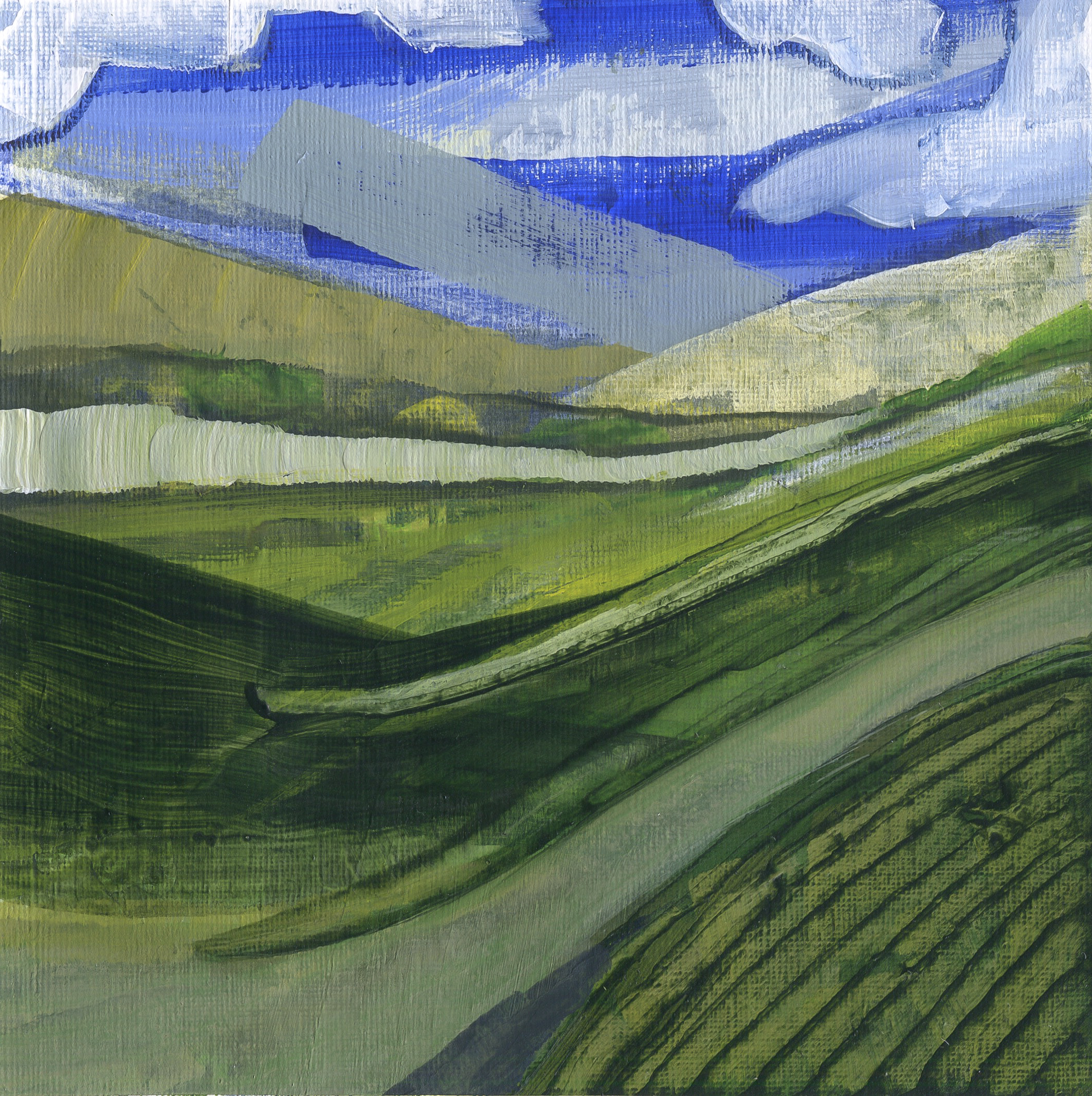
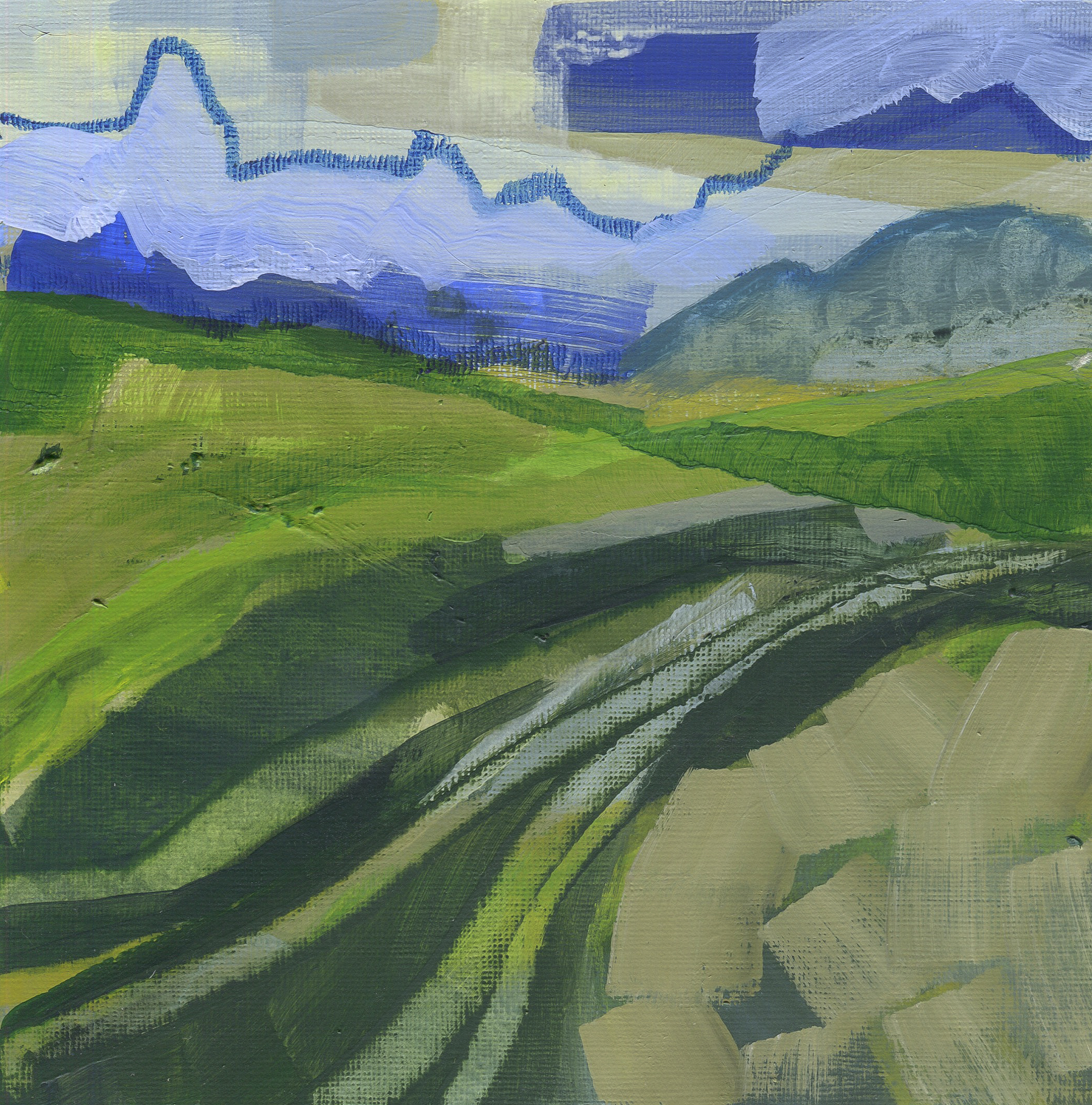
Each method produced unexpected marks.
Rather than treating them as accidents, I started recording them in my sketchbook so I could return to them later. Over time, I also made a conscious effort to paint more freely. Consequently, the work developed greater movement and energy.
Although these marks rarely appear directly in my finished photomontages, they continue to influence the textures, layering and visual language that run throughout my work.
Developing Confidence Through Repetition
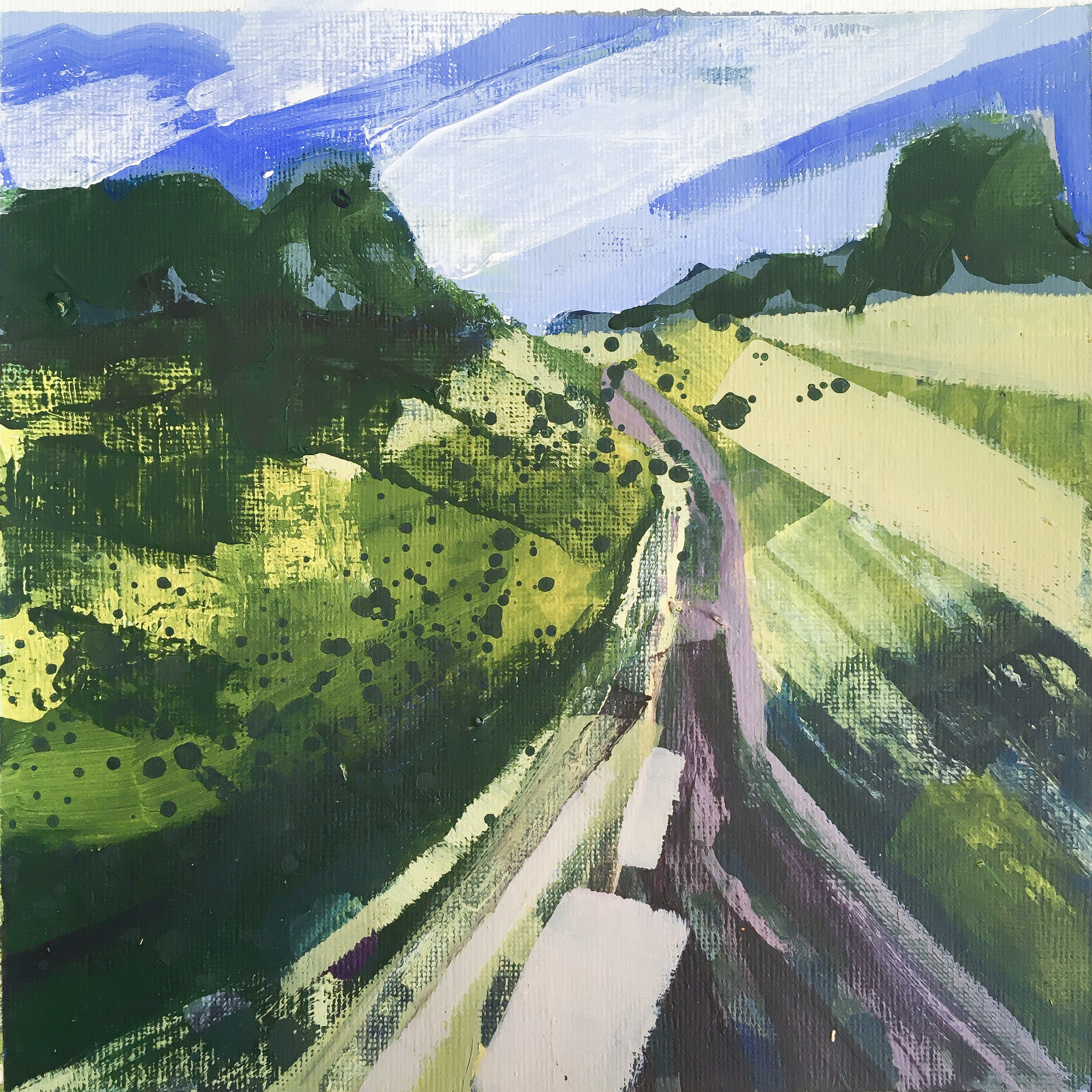
Eventually, painting became less about individual results and more about establishing a rhythm.
Working on several small studies at once removed much of the fear of making mistakes. At the same time, repeating similar colour palettes and processes gradually built confidence. I also do this when creating photomontage.
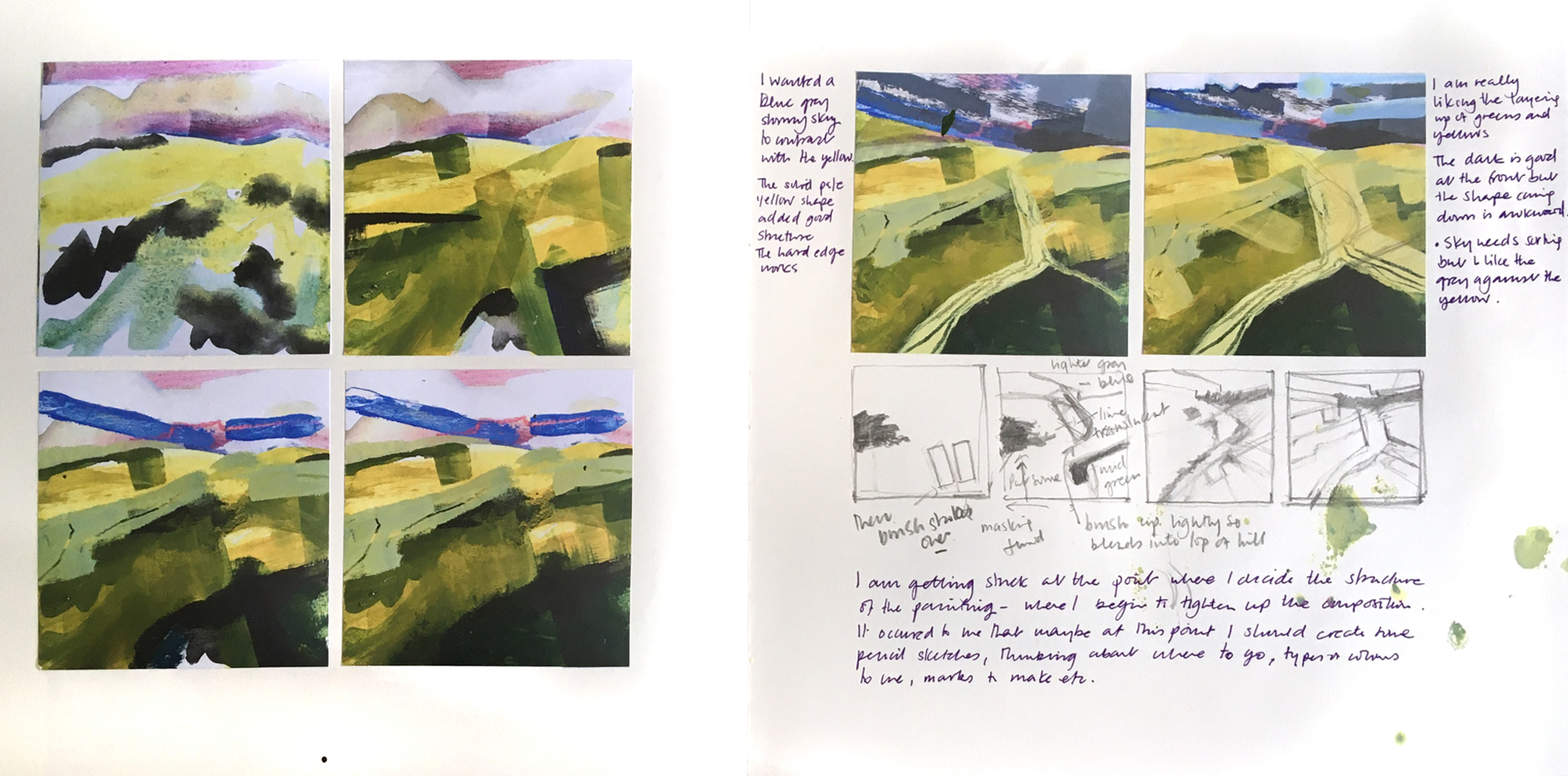
I also began photographing and printing each stage of a painting. Looking back through those images often revealed solutions that weren’t obvious while I was working.
Similarly, sketching over printed photographs allowed me to test ideas before committing to further changes. This combination of observation, experimentation and reflection mirrors the way I develop my digital photomontages today.
How Painting Influences My Digital Photomontage Practice
Although my finished artwork continues to be created through digital photomontage, this painting project has quietly shaped the way I approach landscape. Instead of concentrating on accurately representing a place, I now pay closer attention to atmosphere, balance, colour and structure. Likewise, I have become more confident in allowing intuition to guide the creative process.
Most importantly, I have learned that progress is rarely obvious while you are making the work. However, when ideas are recorded in sketchbooks and explored consistently, even small experiments begin to build into something much larger.
Ultimately, whether I am layering original photographs or exploring paint on paper, the goal remains the same: to create imagined landscapes that invite a moment of stillness, reflection and connection with the natural world.





I agree with everything you’ve said here except needing to understand the structure of landscape. I think if your intention is to abstract the landscape the less you think about linear and aerial perspective the better! Like you, I find photographs (and sketches) can be really limiting, on the other hand I get stuck without them! I think your work is going really well- keep it up!
Thanks Colleen. I think you are right, the more I am trying to work from photos with any degree of accuracy. the more ‘stuck’ I am getting. It seems paradoxical! Thinks so much for your encouragement.
Sounds like a useful course. Some really lovely work here. Thanks for sharing your sketchbook
It was really good. The one I took was free but I know she does a much more in-depth one. Thanks for your kind words 🙂
Its interesting that your trying to portray actual places at the same time as being abstract, I don’t see many doing that and find it exciting .
Thank you. I’m just figuring it out at the moment. I think though it is often the sense of a place that we take away from it rather than specifics, at least that is what I am telling myself 🙂
Thanks Claire I was looking for some ideas of how to get started on working in the landscape. I also did the Louise Fletcher course which I found very freeing. I think that I might start with a limited palete then also start looking at different mark making techniques.
It was a really good course wasn’t it and free enough to see our own possibilities.
Nice explanation of how you learned to paint abstract landscapes. I appreciate it and read it with great interest.
Wonderful to follow your process! Exciting work emerging. Thanks for sharing your journey. So useful and inspiring me to start painting again.
Wow! I’ve been feeling very stuck with my landscape painting. This post has invigorated me! I also did Louise Fletcher’s free course. After reading this I used one of my taped off painting squares and one of the landscape thumbnails that I’ve been doing and found a whole new approach. What fun! Thank you for posting this.
Thank you for your forensic enquiry into your process – it is really interesting and useful. And it makes me realise that we are all having similar struggles when we paint, but that you are working smartly to work out what goes right and wrong, and keeping the photographic evidence! These are really useful process notes. (And I collect loads of painting images on my Pinterest account and have just realised how many of them are your paintings – I must be instinctively drawn to them without knowing they originate from the same artist, both photomontage and paintings!). Thank you Claire. Inspiring.
Claire, some years ago I found a painting online that I thaught was beautiful and I wanted to be able to paint like that. So I painted a big copy of it thinking I would learn how to paint landscapes in the same way. Despite many trials I did not get good results. What a surprise finding your painting back here with all the guidelines and the development process so nicely documented. I see you went through a tough learning process so now I am ready to go through the same and you are showing me how. A big thank you!
This is so useful Claire.. I began my art journey in lockdown although I had already tried turning some of my garden photos into sort of paintings in photoshop – my erstwhile clients in the greetings cards industry were mostly unenthusiastic! I did drawing and painting classes and visited more galleries and such than ever and has all been so much fun. But classes come to an end and you are on your own wanting to do more but in need of a road map. However I am very drawn to abstraction and I just feel that you may have just helped me get me back on the road again. Thank you so much
This is a great post and I am taken with your three colours plus black and white approach. These are the same colours that printers use so we should be able to reacreate anything from them.. You ditched sap green I assume?
Thanks Susie, I don’t think I ever used Sap green, but have made the greens by mixing yellow and blue. It is really liberating though to use just three colours. And all the colours you mix will go together because they have been created using the same colours.
Clare: I am so excited to find your blog. I took Louise’s Find Your Joy and am now enrolled in Momentum. I love Louise. Your work is a wonderful and practical application of her teachings. My focus for Momentum is a series of abstract landscapes that honor the Cherokee Nation’s “Going to Water” ceremony. Your work is inspirational.