

For more than eleven years, my contemporary digital photomontage has been inspired by the sea. Boats, rocks, weathered surfaces and wide open skies have shaped over one hundred limited edition prints. Moving to rural West Sussex, however, made me wonder whether I could bring that same approach to the landscape. This post shares the beginning of that journey.
Why I Found Landscape Photomontage So Difficult
However, I have often wondered how I would create landscapes using photomontage. Every time I try I have felt stumped by the amorphous nature of the landscape. It is everywhere. It has no beginning and no end and this confuses me.
At the coast it is easy to identify objects of interest such as boats, ropes, rocks and various structures. These are easier to separate from the environment in which they are situated – especially good for photomontage. Yet in the landscape one feature merges into another in a sea of green. This is particularly challenging if I want to cut out various elements in photoshop in order to place them together in a different way.
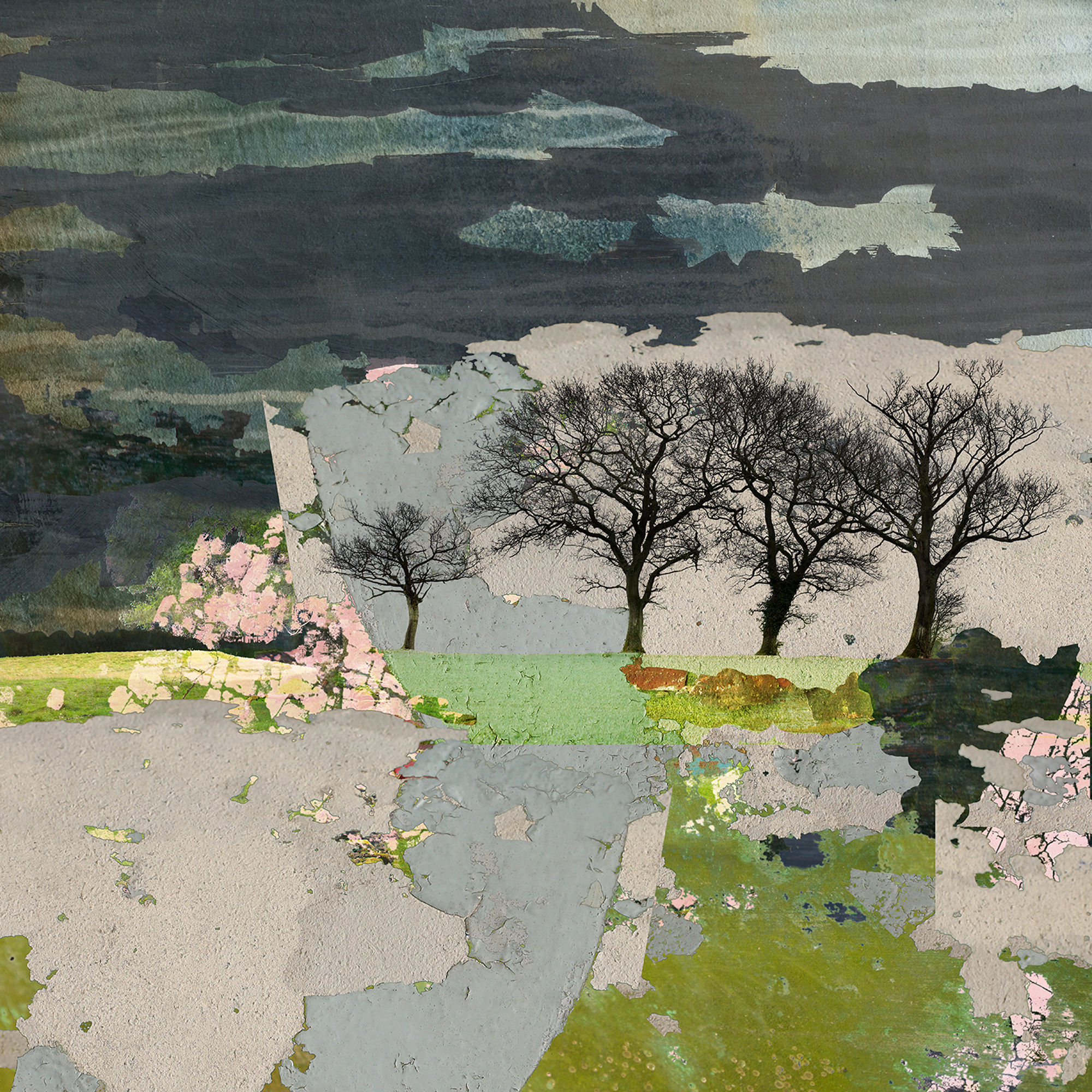
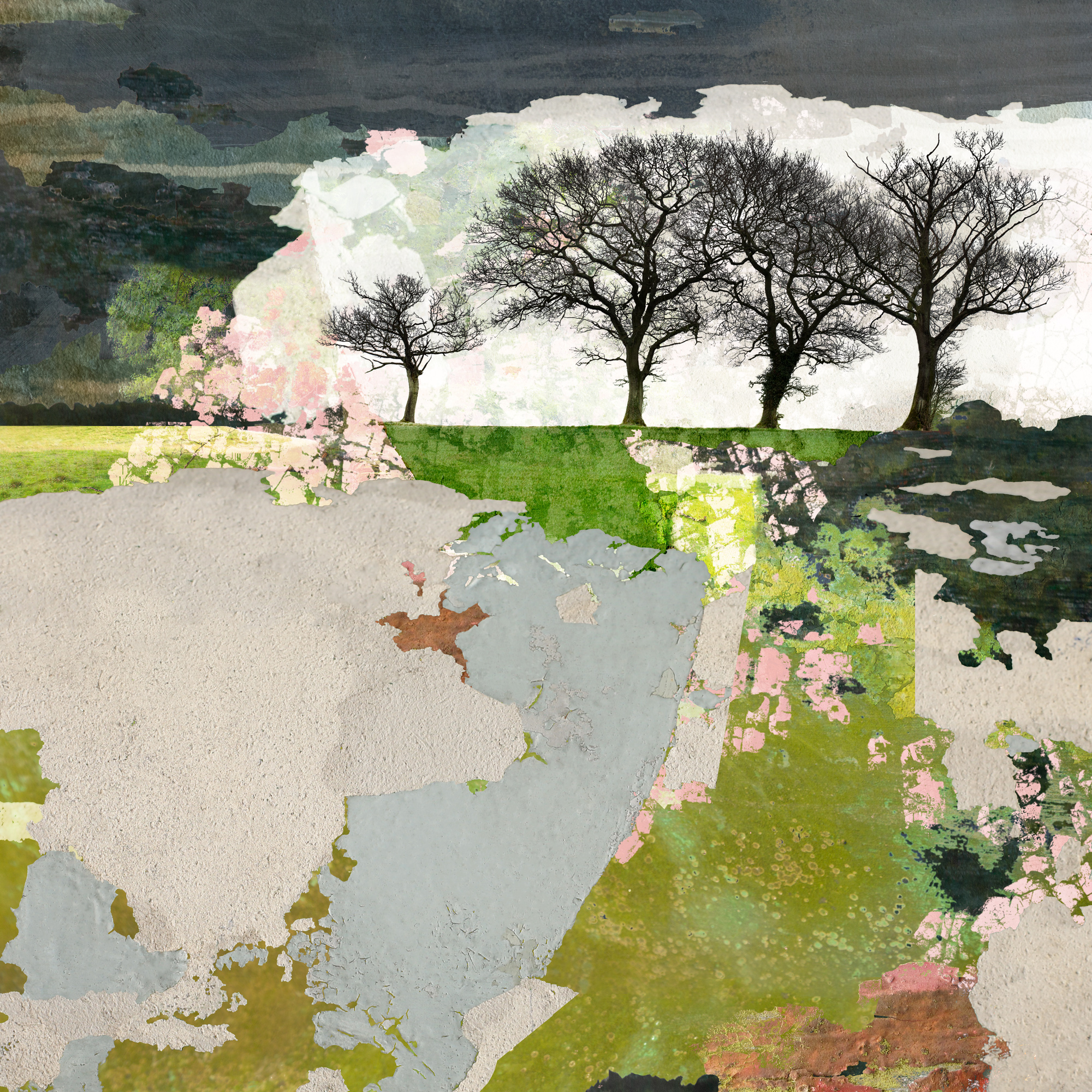
This is my attempt at landscape, using photomontage. It has potential and I want to return to it, however I am itching to go analogue and start sketch-booking!
How Sketchbooks Help Me Develop Landscape Ideas
The idea of tackling landscapes has come sharply into focus since we moved to West Sussex and are now surrounded by it. In my seascape work I have been gradually moving towards a more abstract and painterly aesthetic and it has been something I have been itching to try out in paint. The lockdown combined with our house move has presented an opportune time to experiment with new ways of working. I decided that I wanted to start a sketch book project exploring my immediate environment. In doing so I hope to understand how it works visually and what it is I want to capture about it.
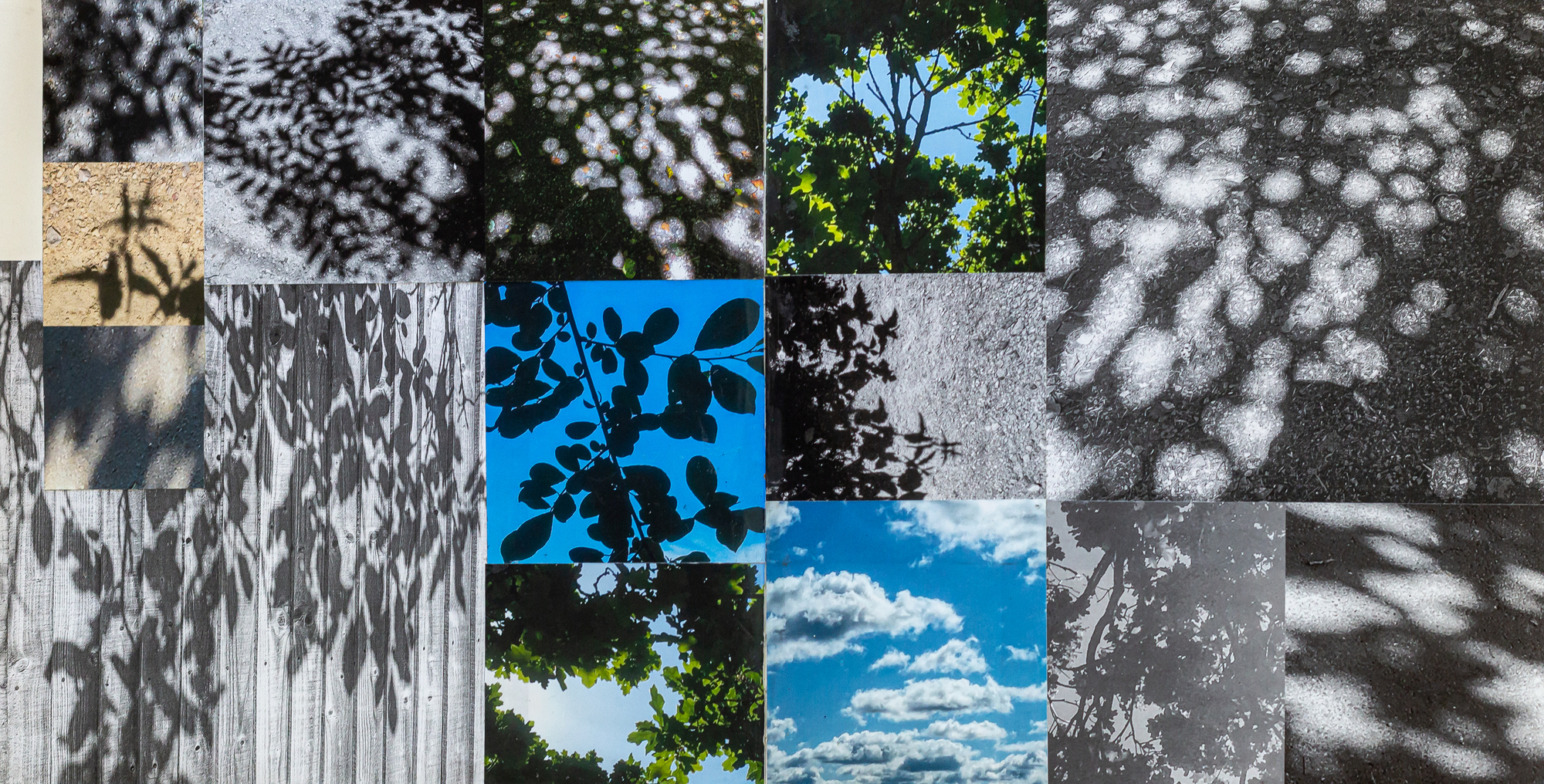
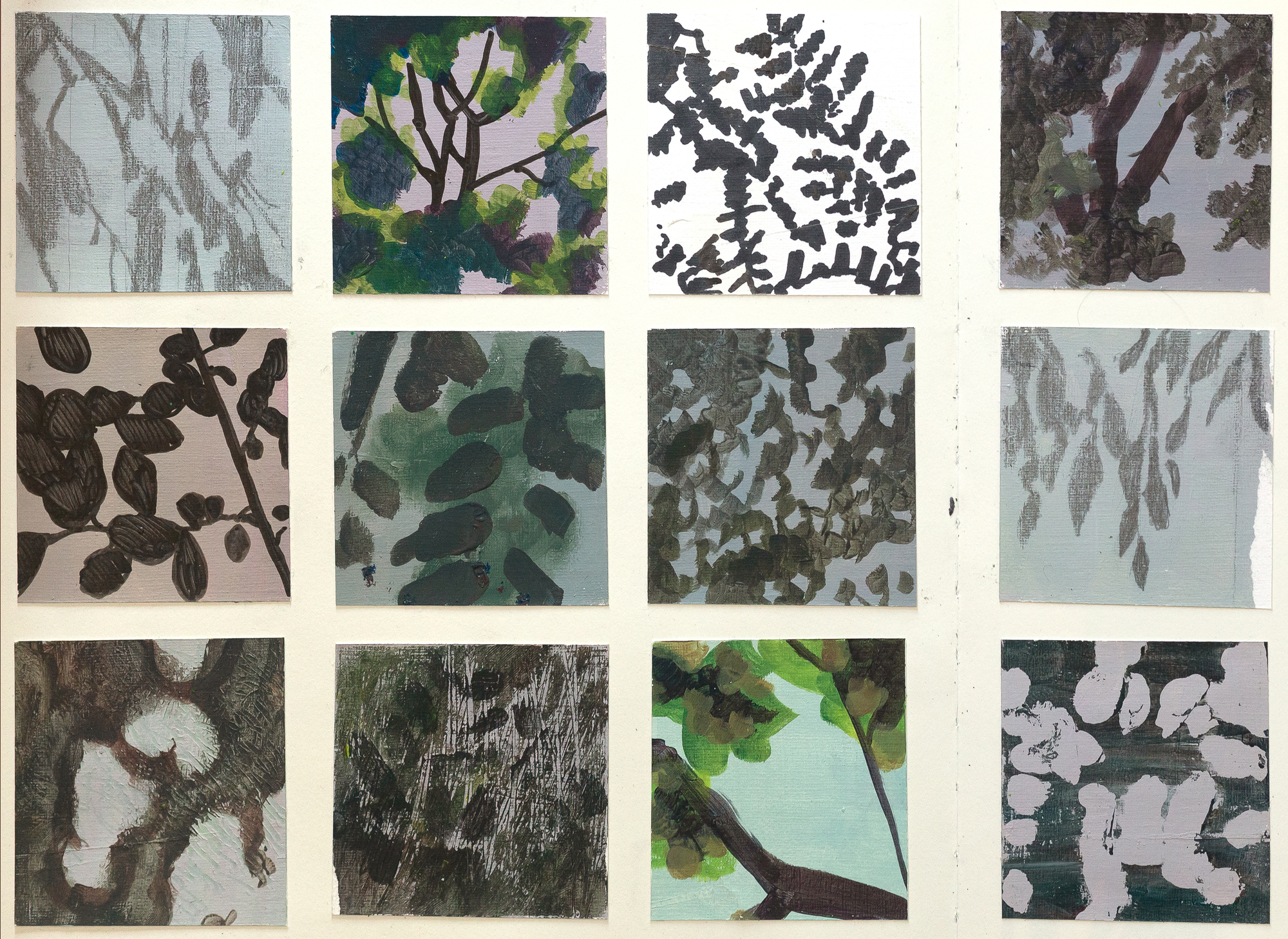
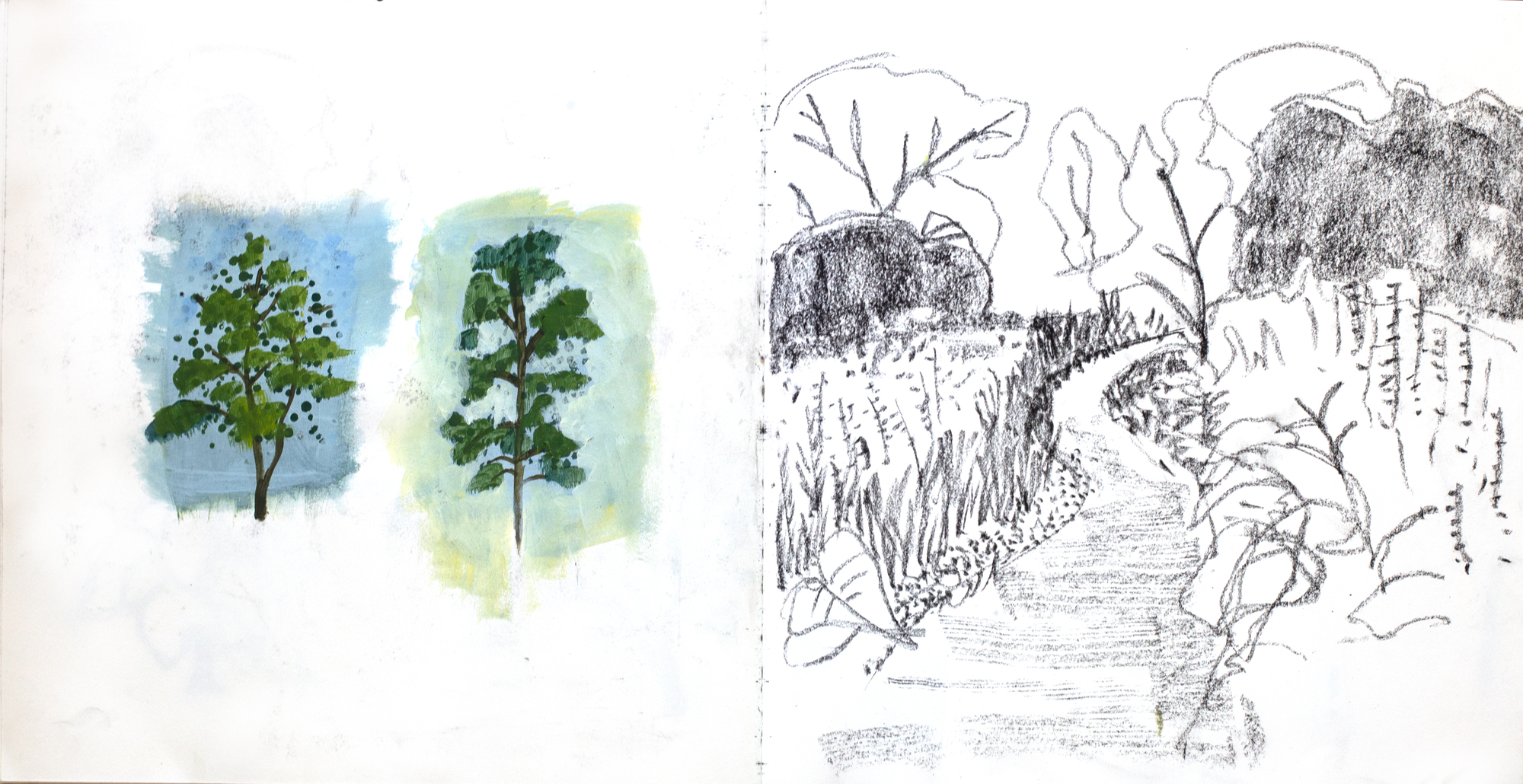
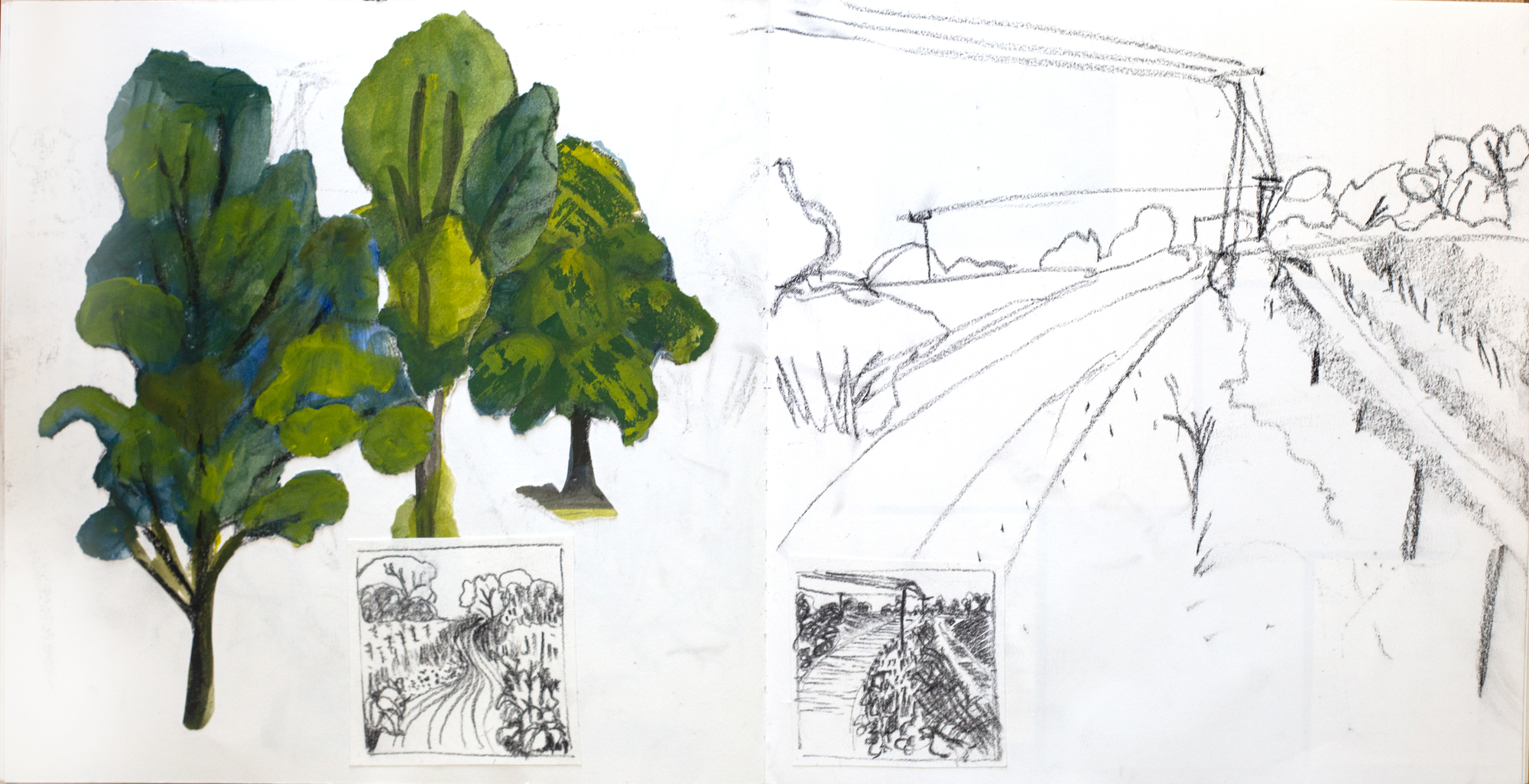
I started by photographing things about the landscape I was noticing or was attracted to. I do this when researching my seascapes. There are loads of footpaths around Lindfield, to explore and I found myself constantly walking from bright sunshine to shaded paths dancing with shadows. This was what caught my eye and this is what I initially tried to capture in photographs and tiny thumbnail paintings. I worked with tiny thumbnails as it was less daunting to create many studies at once on a small scale.
GOING GREEN
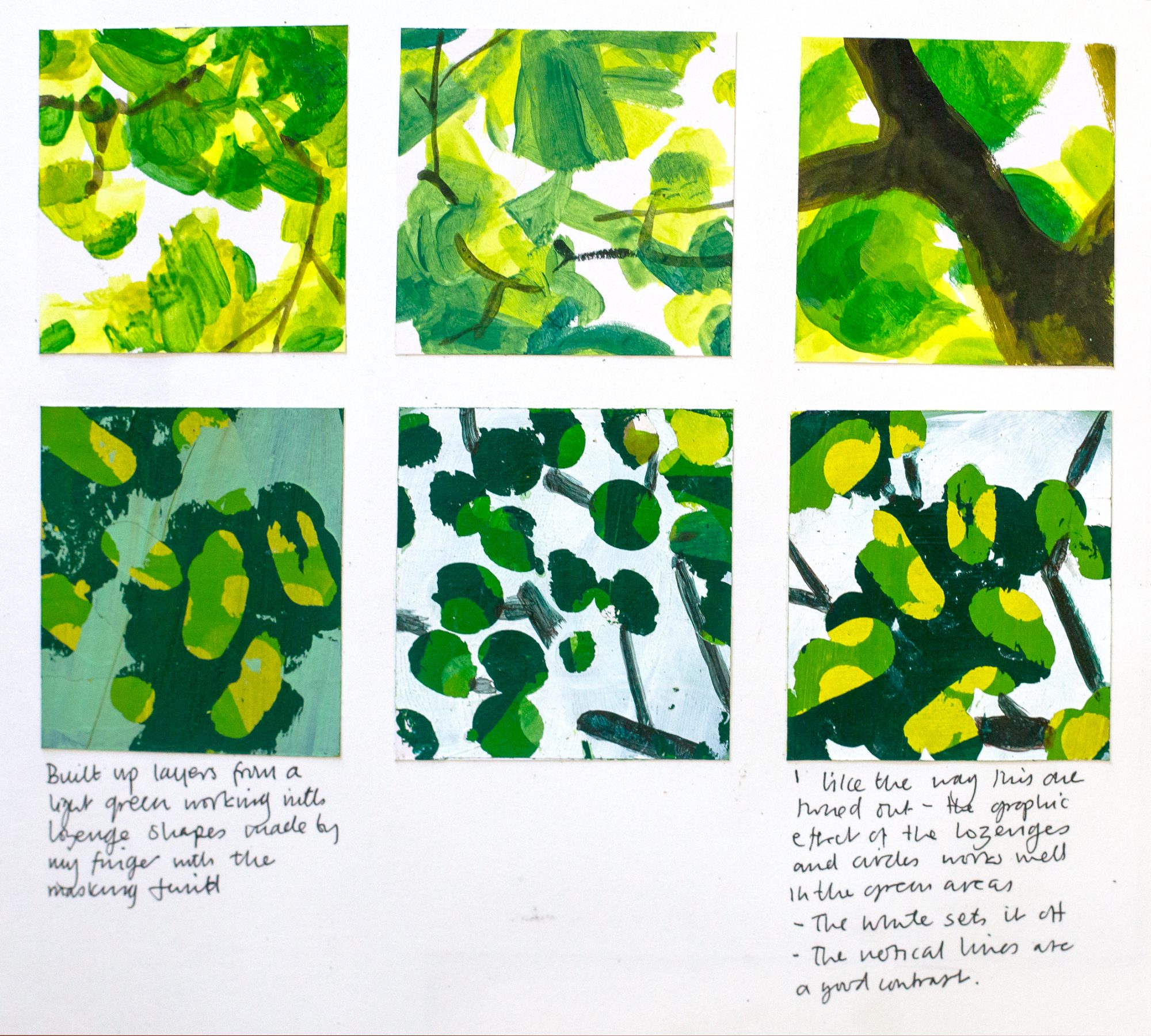
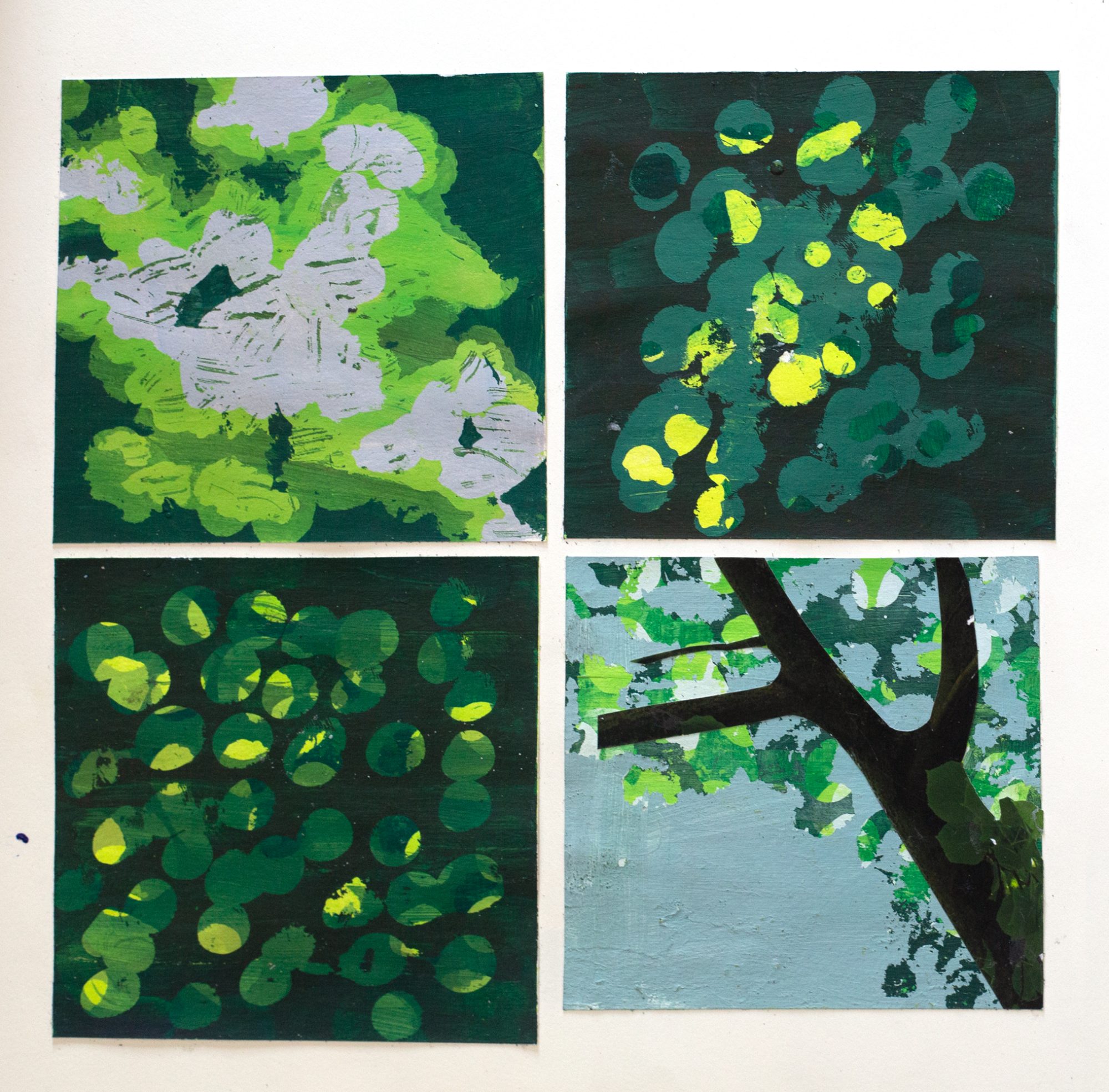
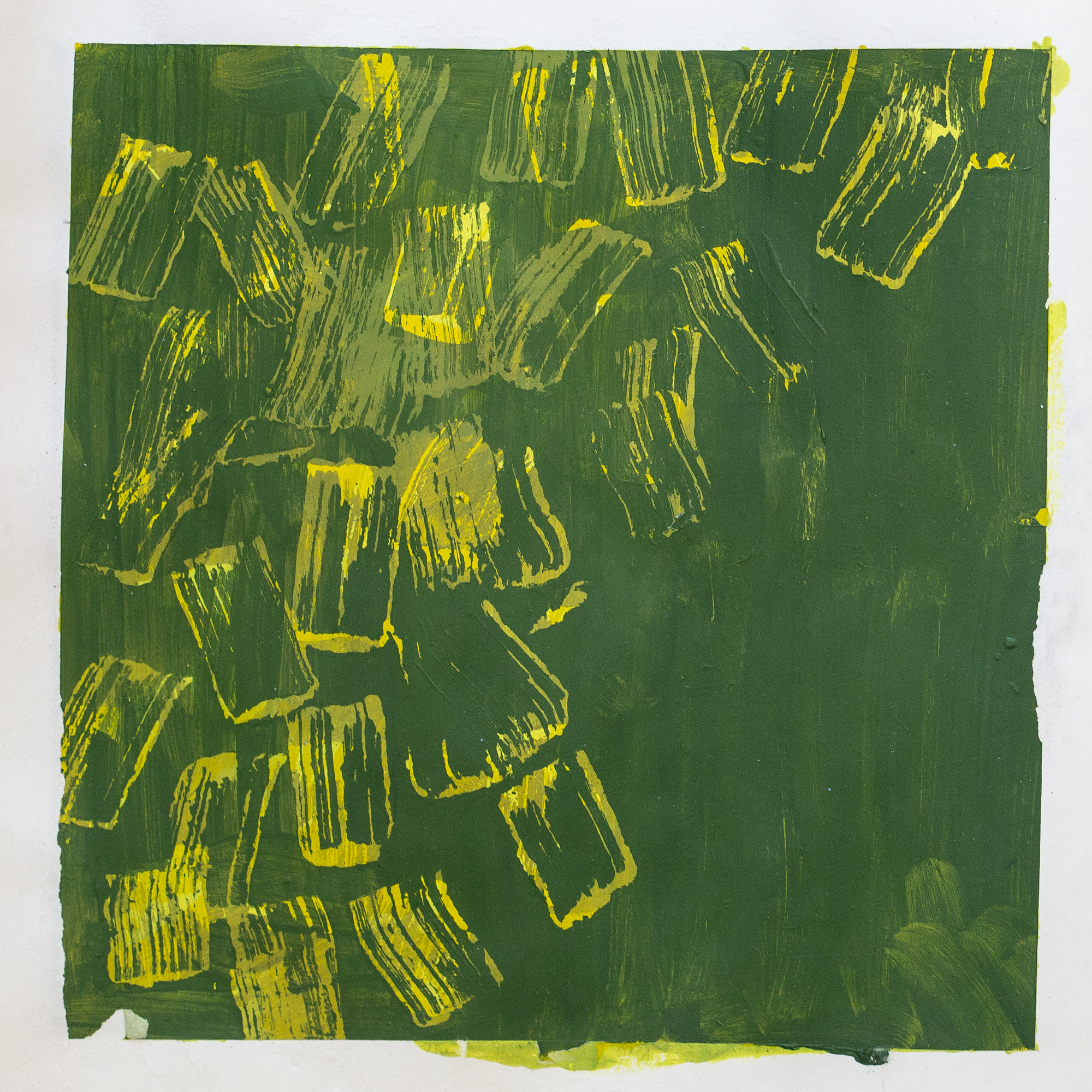
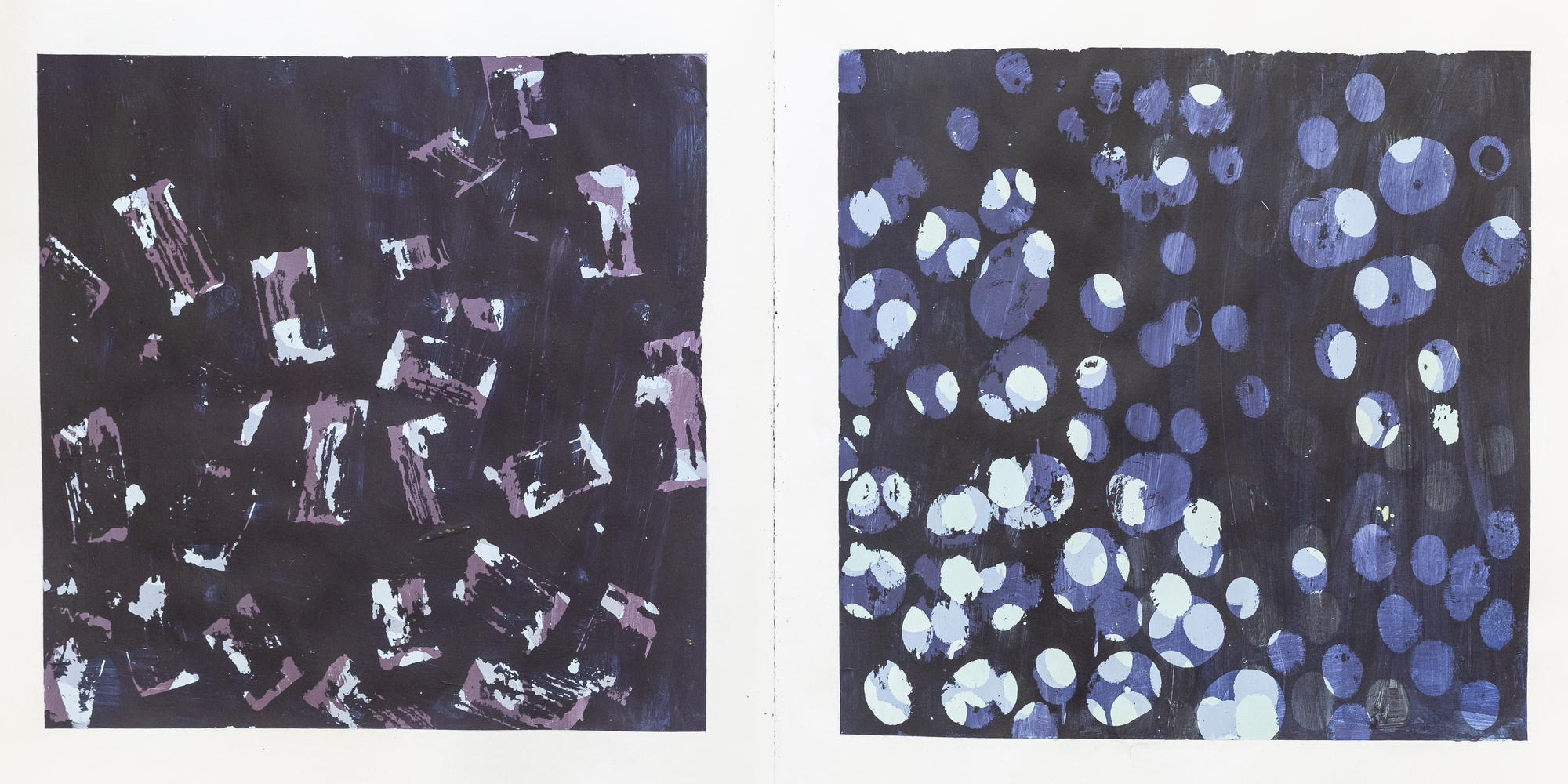
The light though the trees and the layering of leaves fascinates me, especially how it transitions from dark to light. The colour green is a tricky customer to work with. How did I manage to make such a natural colour seem so unnatural when I painted? I turned back to the shadows for inspiration. I loved how the shadows on the path sparkled and danced and the more neutral colours were less jarring.
Returning to my sketchbook has re-confirmed for me that I am a process person. I need to enjoy the process of what I am doing or the way of working, giving up quickly if I am not feeling it. For these studies I started to employ a masking fluid, which was fun but a bit unwieldy. I am letting my enjoyment barometer guide my way through this project.
Understanding how light moves through trees will eventually influence future landscape photomontage prints, even if the final artwork looks very different from these early studies.
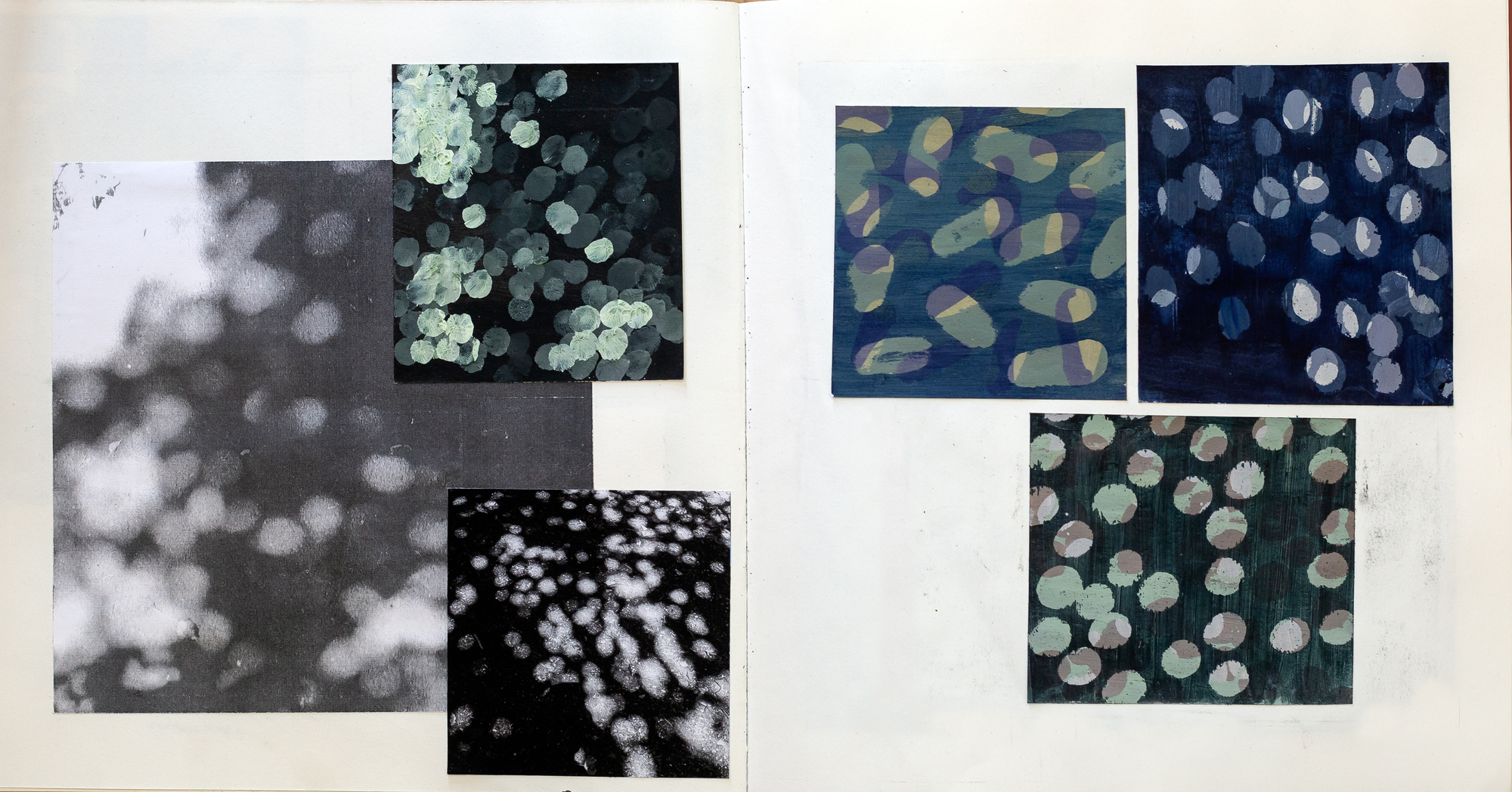
THE BIGGER PICTURE
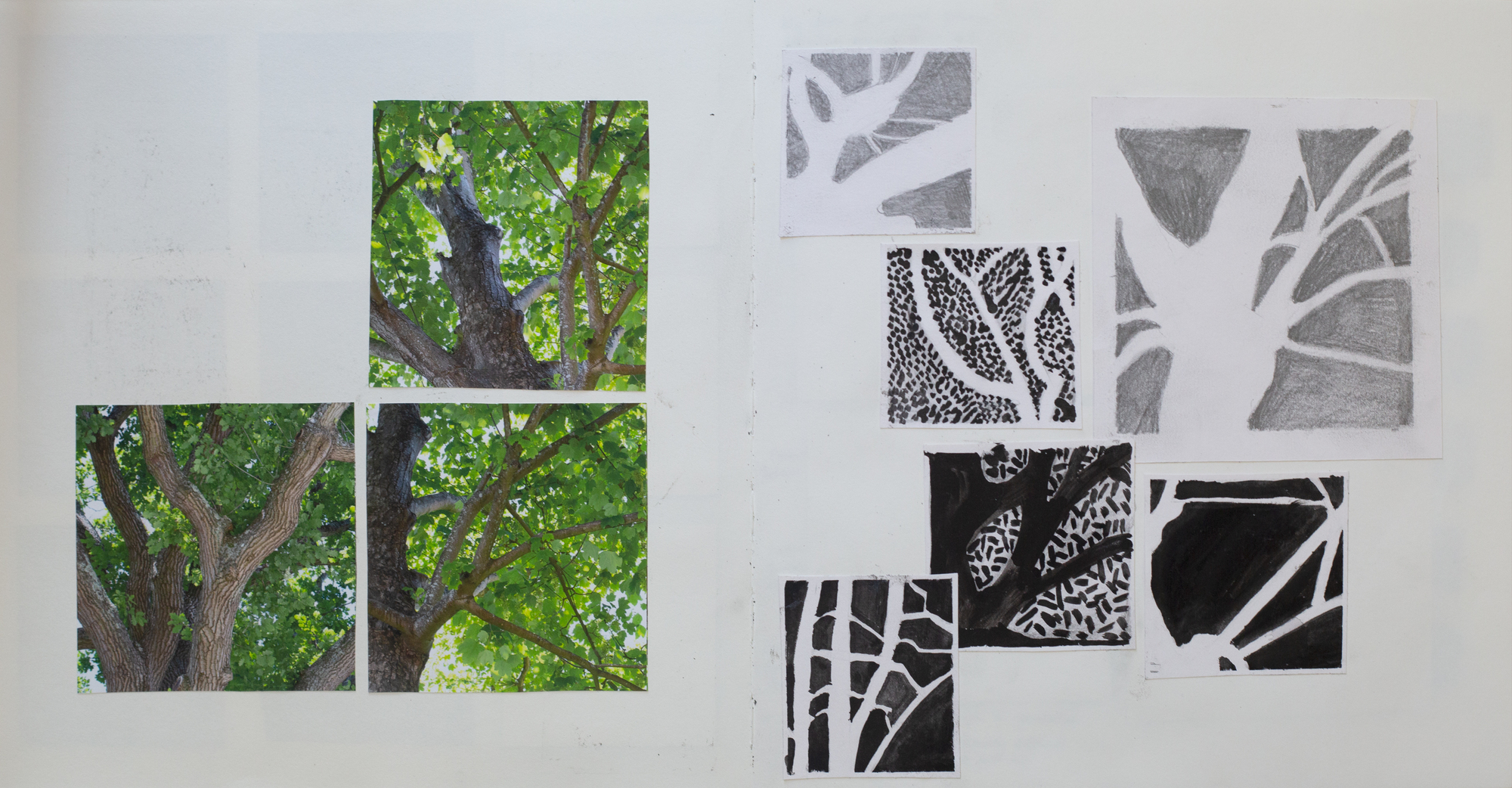
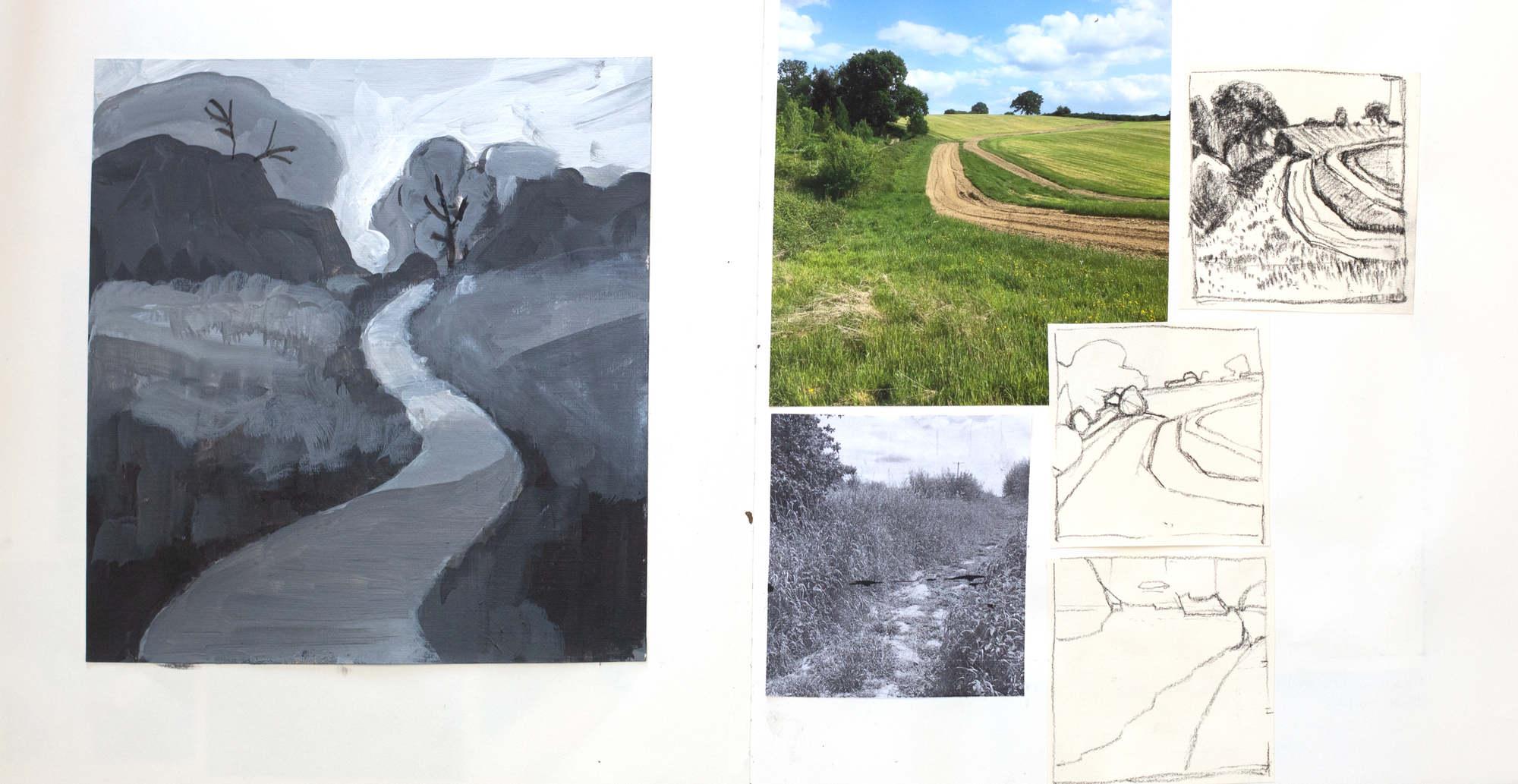
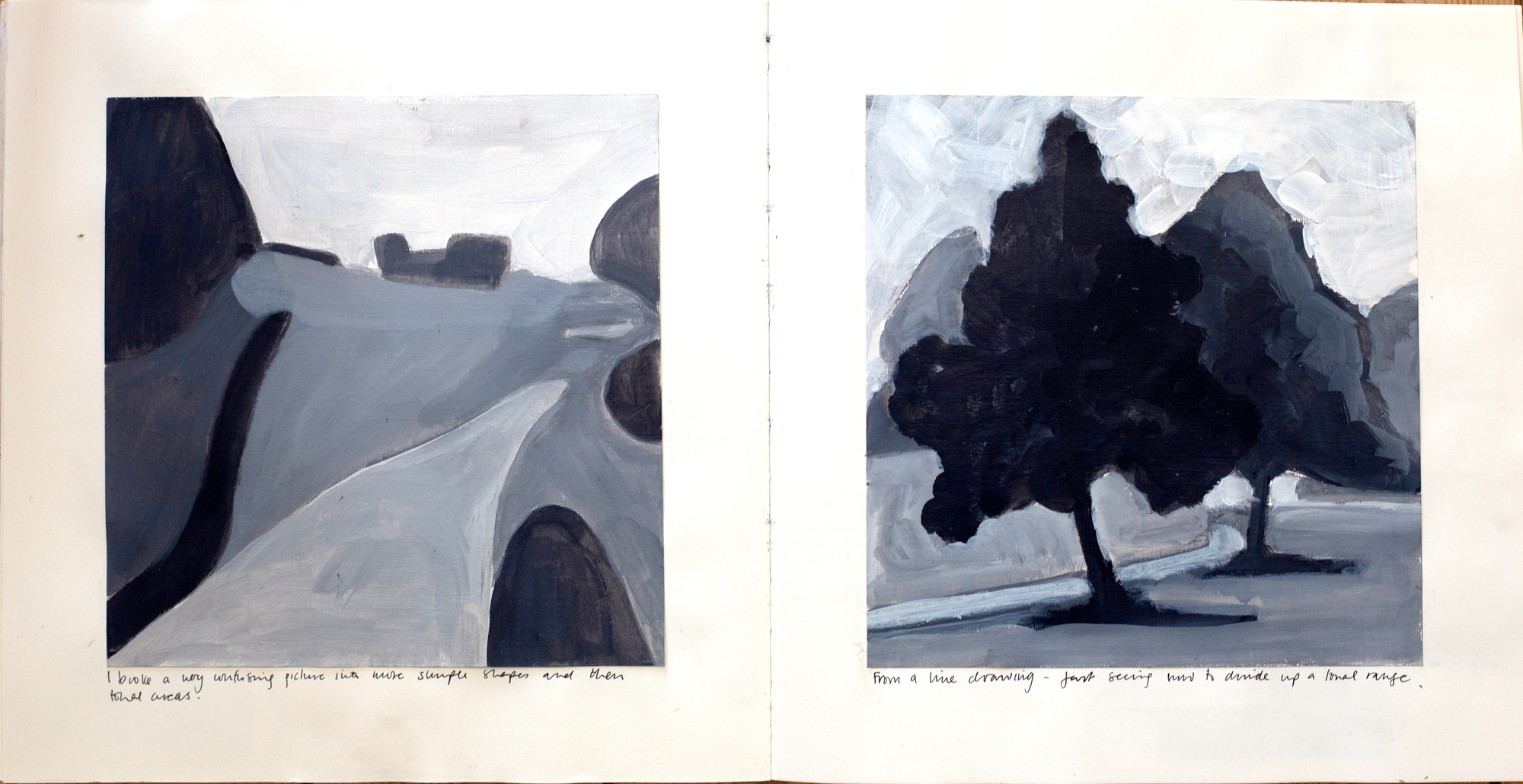
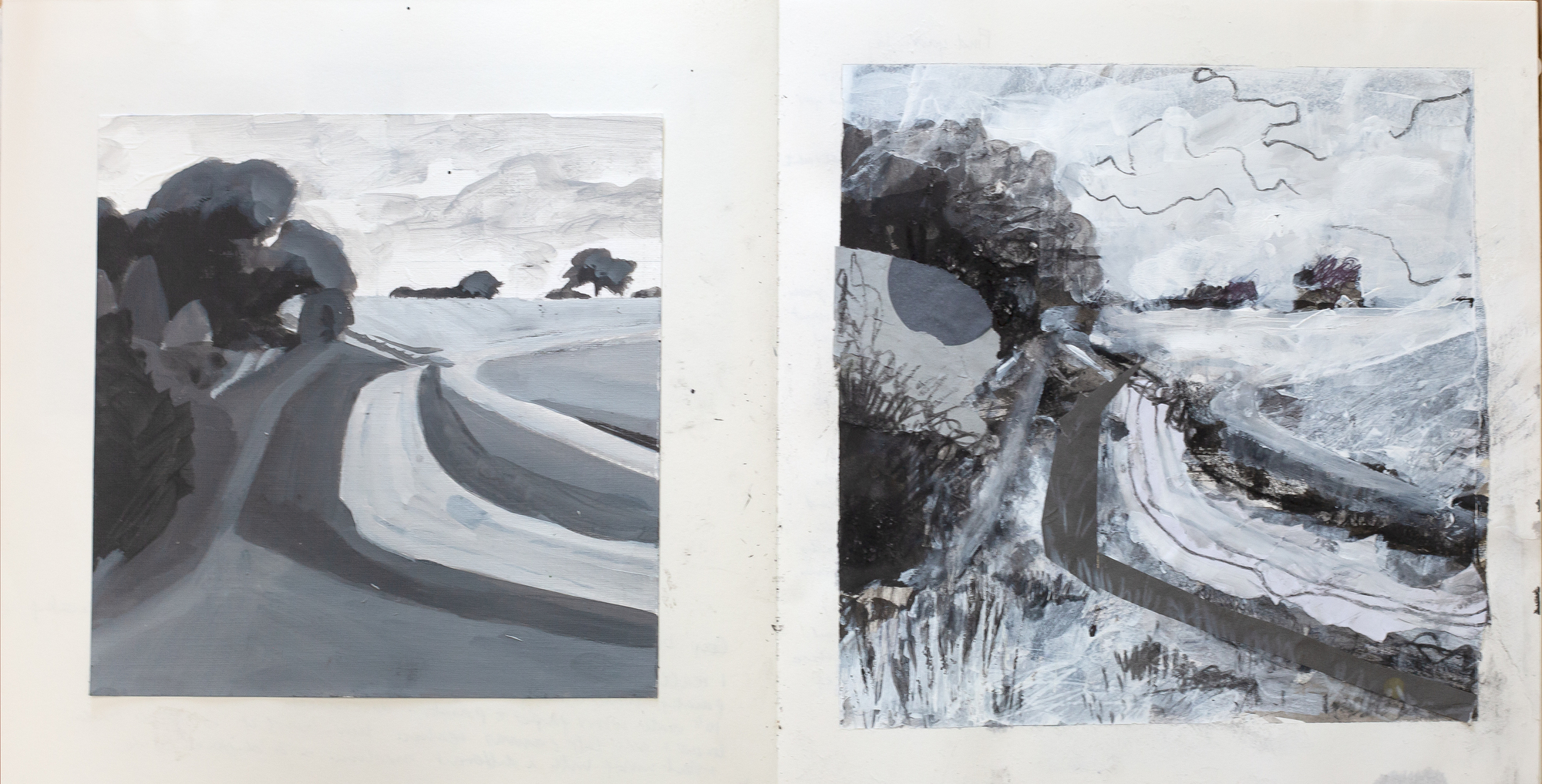
Pattern is something I love, but maybe I have been ignoring the bigger picture. I started to create small sketches of trees and scenes on my walks and quickly realised I knew nothing about painting a landscape. Looking at a sea of green, it is hard to distinguish what is dark and what is light. Trying to paint my sketches using a monotone palette was helpful and enabled me to avoid the colour green altogether. I also began to see how I could simplify composition, breaking landscape down into shapes and areas.
This is often how my digital photomontage begins—not with a finished idea, but with questions that slowly reveal themselves through experimentation.
What This Means for Future Artwork
Although these sketches are only the beginning, they are already changing how I see landscape. I can see possibilities for future digital photomontage inspired by woodland, footpaths and the changing light of West Sussex. Whether they remain paintings, become photographs or evolve into photomontage is something I have yet to discover.
I have been feeling quite vulnerable throughout this process. The confidence of working with the familiar process of photomontage has left and I am feeling like a complete beginner. I don’t know if my work is going to succeed or be an utter failure. But does this mean I should not try it? I would be really annoyed with myself if I caved into that fear. Nevertheless it makes me uncomfortable.
Developing ideas is not a linear process. The direction of the project is dictated by what I don’t know and want to find out. I follow what I am drawn to or conversely do not enjoy. Feeling stuck leads me to try another approach in order to see a way forward. I am trying to find out what I am interested in and a way of working that excites me making me want to discover more. I haven’t even really got onto painting yet! At the moment I am still finding my way, but am hoping to find some solid ground soon.
Explore My Landscape-Inspired Artwork
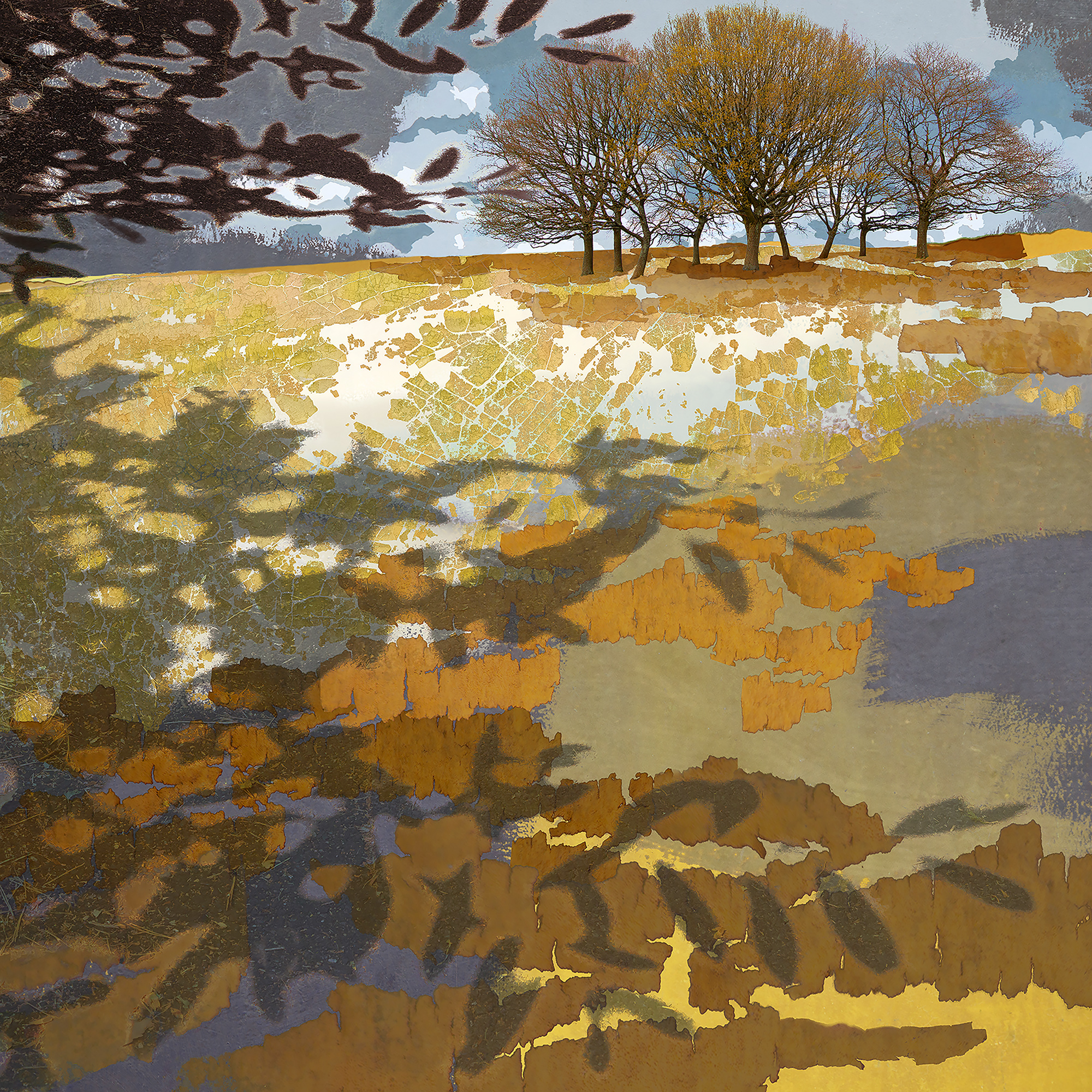
This post was originally written at the beginning of my journey into landscape photomontage. Looking back now, it’s fascinating to see how these early sketchbook experiments eventually evolved into my and other landscape-inspired limited edition prints.
If you’d like to see where these ideas eventually led, you might enjoy exploring:





Hi, I’m a new CAC member and I saw and followed your link. Your blog is beautiful, your writing is soul-filled and thoughtful. I smiled at the many patterns of light and shadow that you captured in photos and drawings–I enjoy natural patterns and seascapes because I love the ocean. As a former glass artist who has moved into abstract acrylic painting, I can totally relate to the uncertainty and fear that you express. That’s why I joined CAC, even though I am pretty isolated here in the high desert of central Arizona (USA). I find that listening and watching Alice Sheridan has inspired me and given me a boost. Here are a couple of my own personal mantras: Nothing you do in art is ever wasted…even if it doesn’t turn out the way you’d like, even if it seems to be a “detour” off the path you’d like to take in your work, even if it gets messed up, it doesn’t matter, because every thing you do contributes to your learning. (Learning what NOT to do next time is a valuable lesson!) My own progress as an artist is mainly composed of setting up new corners to paint my way out of. It seems that a lot of what I do involves trying out new things and in doing so, creating new problems for myself to solve. And all of that is OK. Here’s another mantra: The only way to become a good painter is to paint. So just paint! And if that’s too scary right now, do other artistic things until you get bored with them and the obvious next step is to put some color on a canvas, board, or paper. Being an artist is, in my opinion, one of the best and highest ways to be truly yourself. Lastly, if the landscape you see is overwhelming, I suggest zooming in, either with your camera or on your computer. Take a favorite photo and see how many different ways you can crop it to tell different stories. Good luck with your blog!
Hi Jude
Thanks so much for your lovely words and very good advice. I will use your mantras to go forward in my project. It’s funny how the best advice is actually very straight-forward and we just seem to over complicate everything. I can totally relate to the idea of solving problems – it’s how I work with my seascapes, and I like the way you describe it as painting your way out of corners. It must be amazing to live in a desert – a very different environment I imagine, and I am thinking you must be surrounded by lots of space which much be incredible and inspiring.
Hi from the US. I read your next blog post first and really got to see your improvements particularly with color. Your sketchbook studies are very instructive and inspiring as I work to abstract my own observational drawings into paintings.