

Starting Points for Digital Photomontage: How My Artwork Begins.
Inventing New Realities
I love digital photomontage because it allows me to invent new realities from seemingly unrelated photographs. I can create places that never existed and connections that could never happen naturally.
Unlike traditional photography, digital photomontage gives me the freedom to rearrange the world around me. I can change scale, move objects, and combine textures, shapes and details. More importantly, I can follow an idea without knowing where it will lead.
And that uncertainty is one of the things I enjoy most about making art.
Is it Art, Photography or Design?
When I first started creating photomontage, I struggled to categorise what I was doing.
Was it art, especially when so few galleries would accept work created digitally? Was it photography because I used my own photographs? Or was it design because I arranged different pieces into a composition?
For a long time, I wasn’t sure.
Now, however, I prefer to think of it simply as art. I create without an external reason or a practical purpose. Instead, I make images because I feel an internal need to create them.
For me, that is reason enough.
There Isn’t One Way to Start a Photomontage
I would love to have a straightforward method for starting every artwork. In reality, though, my digital photomontage process can begin in many different ways. Some of these approaches are shown below, along with the images they became. The starting point changes, but the curiosity remains the same.
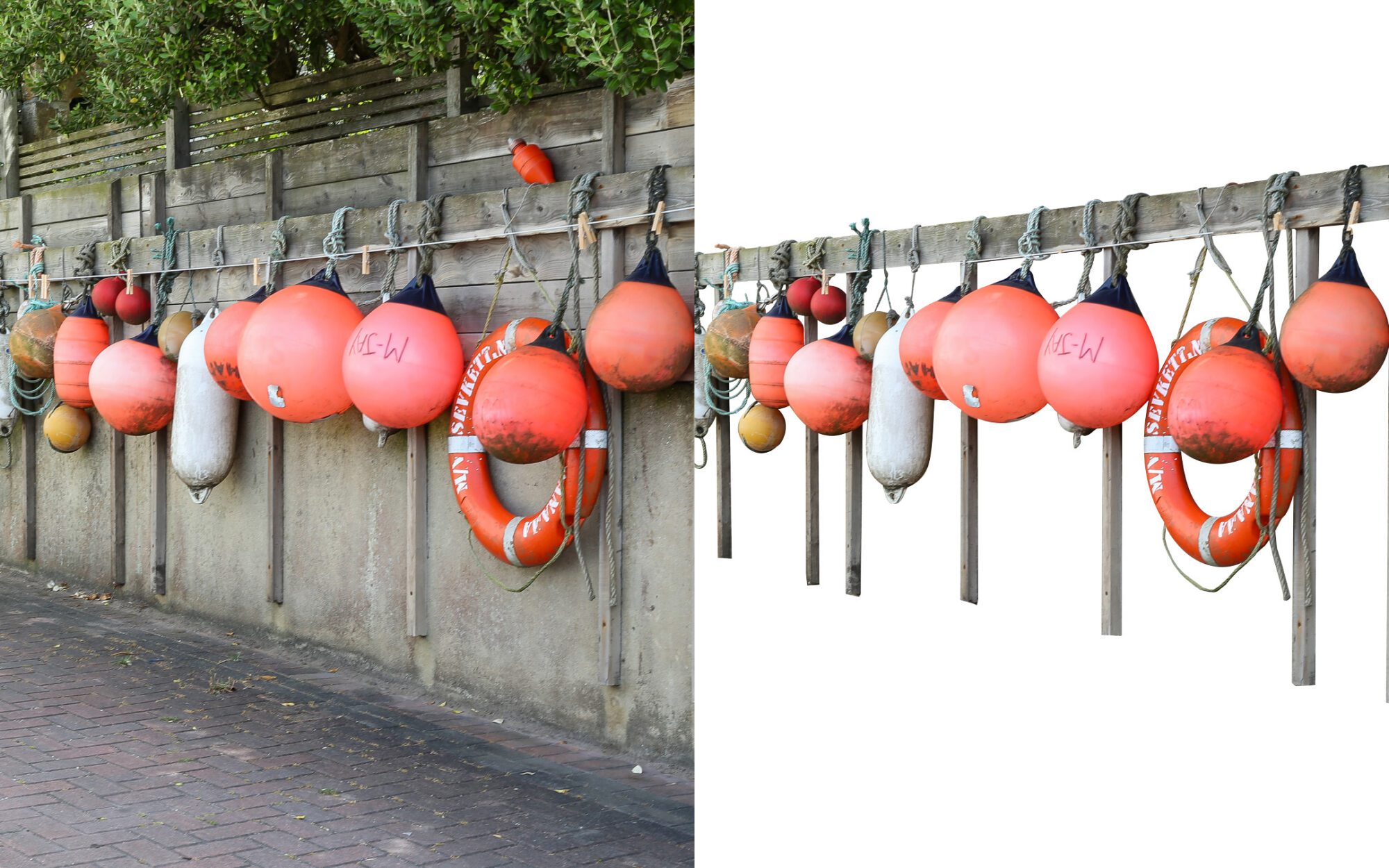
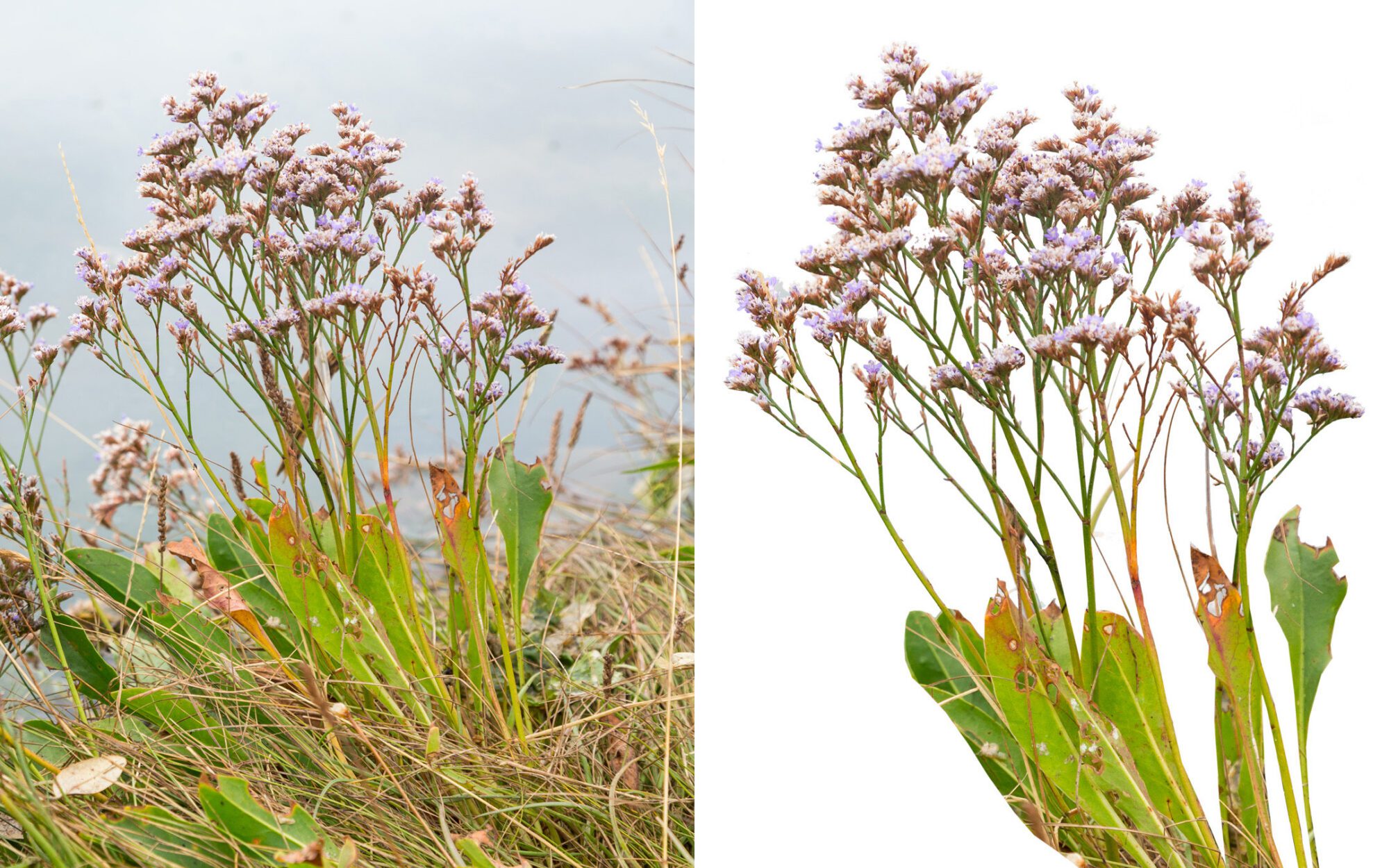
At some point however, all approaches involve digitally cutting out photographic details and separating them from their background, which can be a lengthy process.
Starting With an Analogue Collage
Although I don’t use this approach as much now, I used to begin by creating analogue collages in a sketchbook.
I would print photographs and spread them across a table. Once I had them in front of me, I could start moving them around, making unexpected connections and watching new images emerge.
There is something incredibly satisfying about working with scissors and glue. The process feels immediate and playful because I can physically move one piece beside another and instantly see what happens.


Once I find something interesting, I can translate that rough collage into a digital photomontage on the computer.
Starting With Colour
Sometimes colour provides the starting point.
I bring together photographs that complement each other in terms of colour and paste them into the same Photoshop file. From there, I begin moving the images around and looking at how I can build a composition that works.
I’m not necessarily trying to create a realistic scene. Instead, I’m searching for something that feels right.


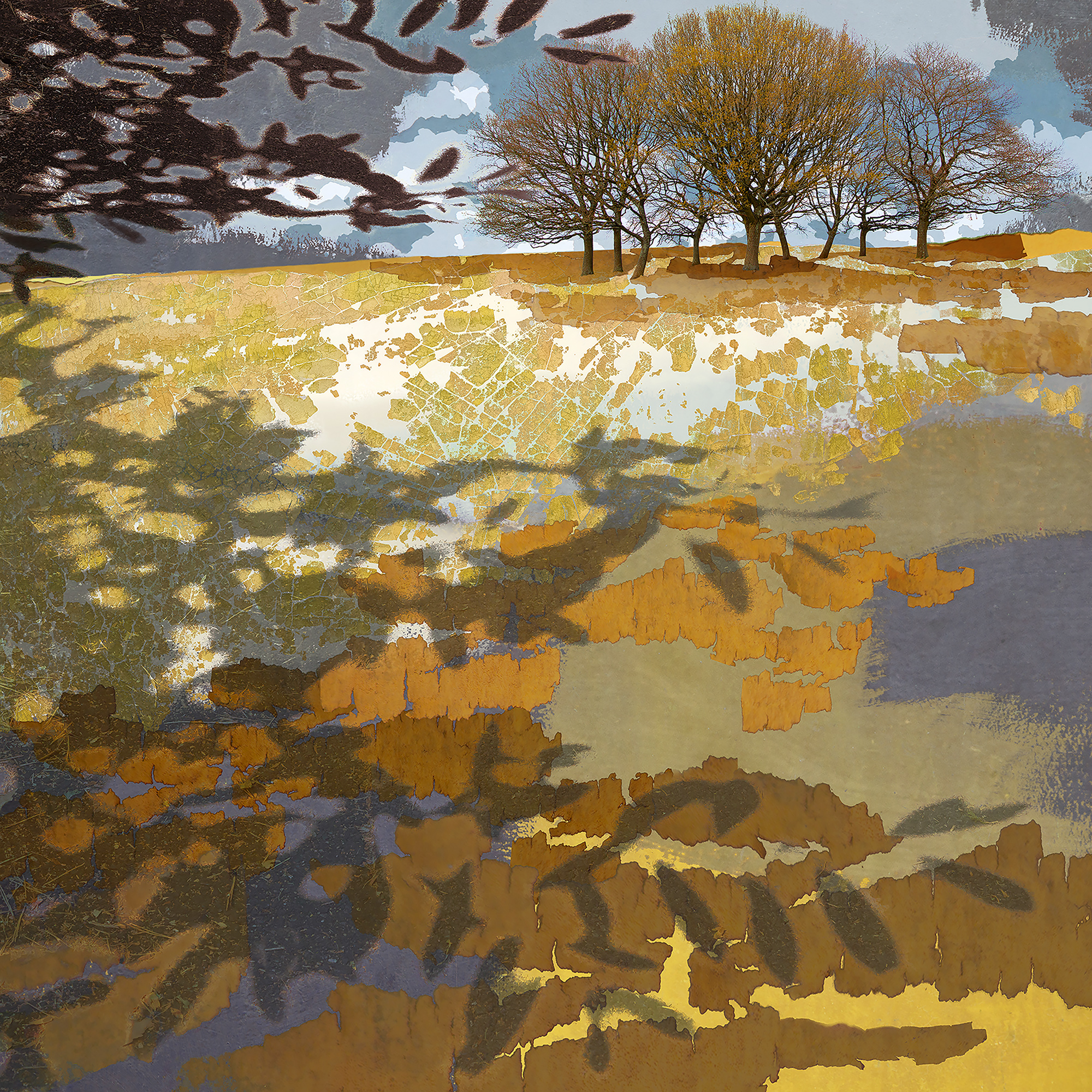
Colours played a big part in making this photomontage feel Autumnal.
Starting With Place
At other times, I begin with photographs connected by a particular place.
Perhaps I took them on the same day, in the same landscape or under the same light. As a result, they already share something visually. However, I don’t want to recreate that landscape exactly as I experienced it.
Instead, I try to forget the specific layout of the place.
I’m more interested in creating a sense of familiarity informed by memory. I move the photographs around and allow the landscape to change.


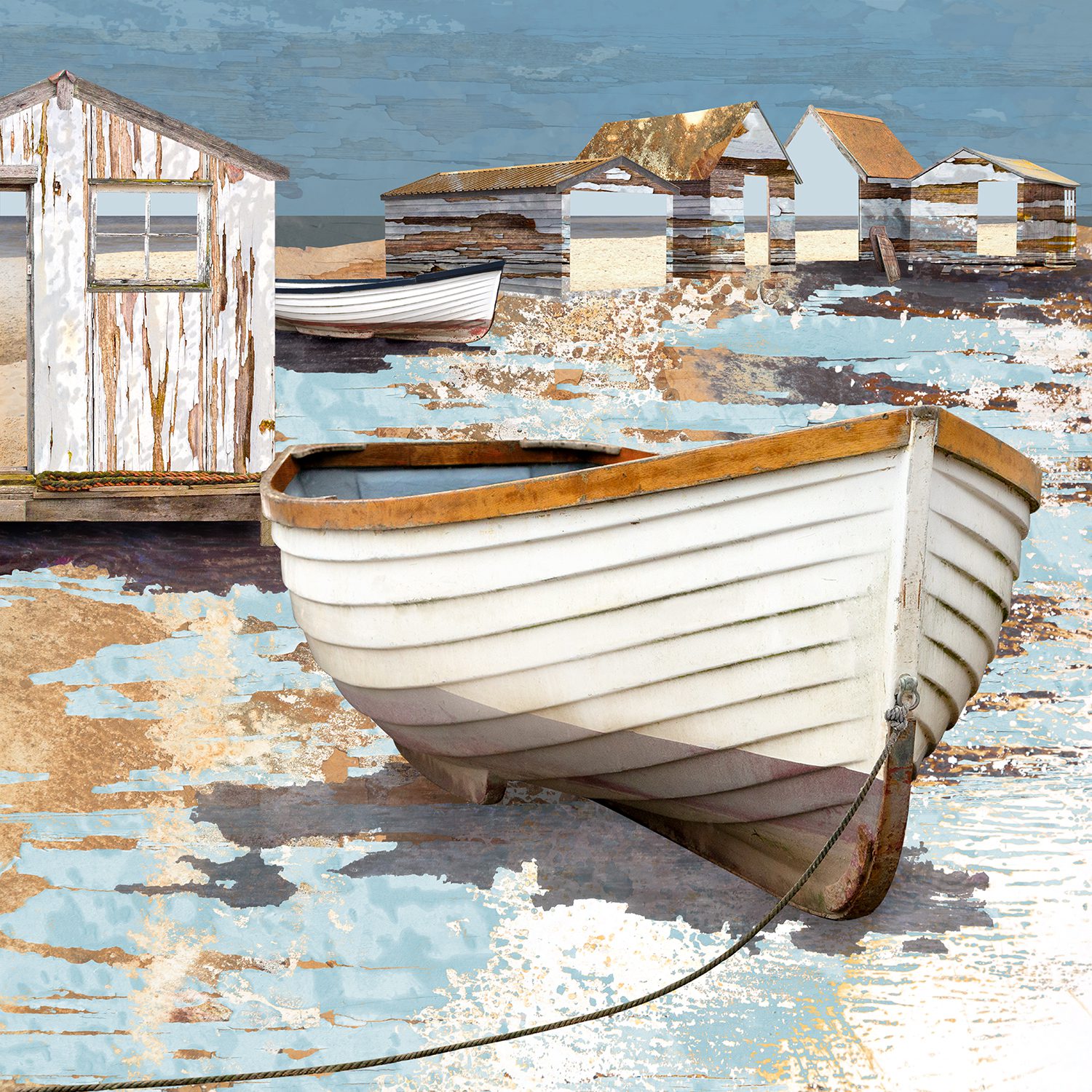
Eventually, I hope to create somewhere that feels believable without being an exact representation of anywhere I have been
Starting With an Interesting Subject or Object
Sometimes a single photograph provides the starting point.
Usually, I recognise its potential when I take the photograph. Perhaps I notice an object, a shape or a detail that immediately makes me wonder what could happen around it.
I might not know what the final artwork will look like. However, I know that the photograph has something I want to explore.
So I bring it into Photoshop and start building around it.

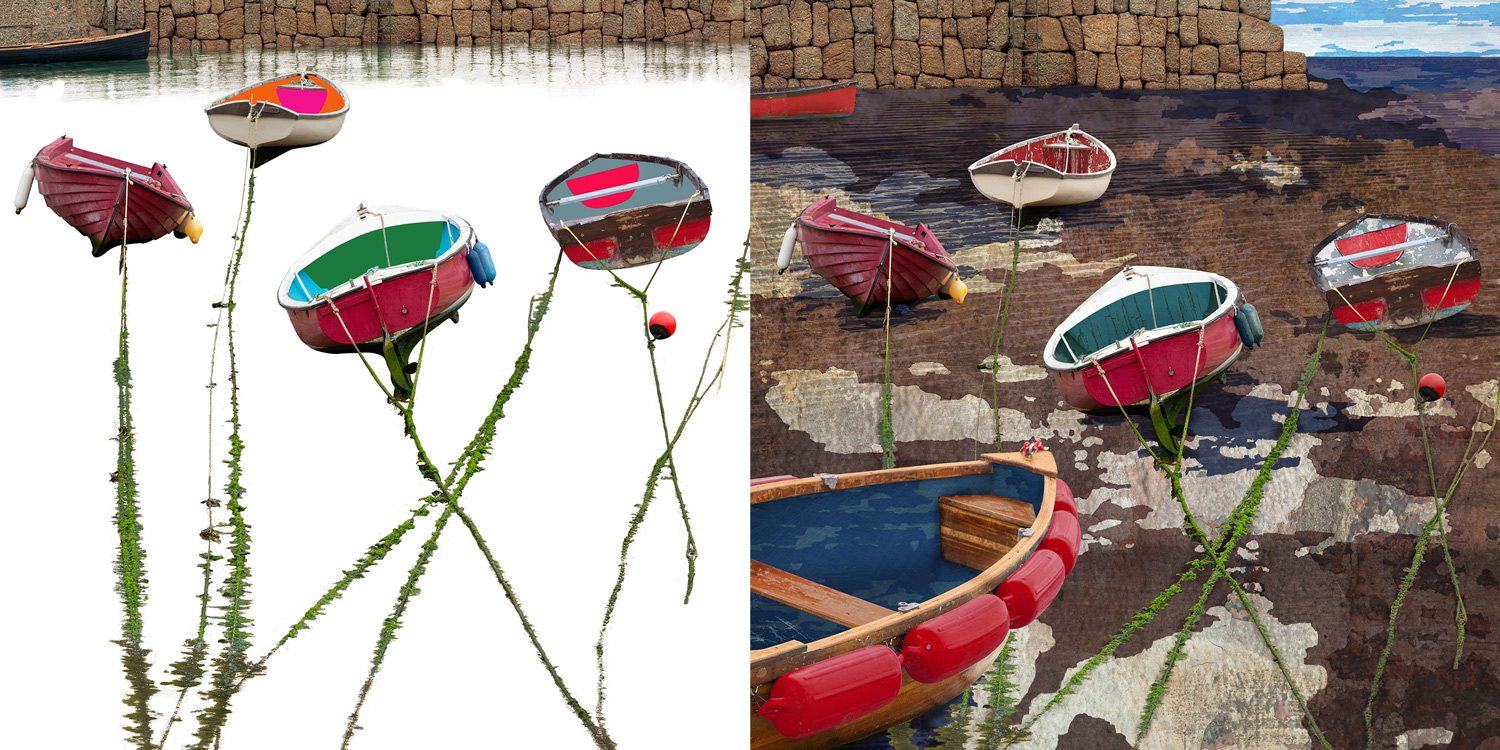
Starting With Composition
Occasionally, I photograph something because its structure already feels like an image.
In these cases, I use that structure as the foundation for the photomontage. I might mask shapes within it and later fill those areas with pattern, colour or another photograph.
The original photograph therefore becomes less important as an individual image. Instead, its structure gives me somewhere to begin.


Starting With a Word
A few years ago, I discovered a challenge on Instagram called Februllage, created by the Edinburgh Collage Collective and the Scandinavian Collage Museum.
The challenge invites collage artists around the world to create a collage, either analogue or digital, in response to a different word each day throughout February. These images I created for the challenge were in response to the words house, rose petal and telephone.


Some words are straightforward nouns, while others are much more abstract. Consequently, they ask artists to think beyond the obvious and interpret them in completely different ways.
I love this kind of starting point because the word gives me a nudge without telling me what to make.
Starting Randomly
Sometimes I think the most enjoyable thing to do is simply collect a random selection of images and try to create a narrative between them.
That is exactly what collage and digital photomontage do so well.
They allow me to put together things that would never naturally exist beside one another and then ask myself, What if?


I don’t always need an answer before I begin
Starting With Texture
If you know my work, you will probably know that I love a bit of peeling paint.
I’m drawn to weathered and abstract surfaces because they often contain the beginnings of landscapes. A patch of peeling paint might suddenly look like a coastline. Another surface might suggest distant hills, water or a cloudy sky.
These textures can therefore become the starting point for an entire photomontage.
They already carry a mood. Perhaps they suggest a particular landscape on a particular day, and I can build from there.

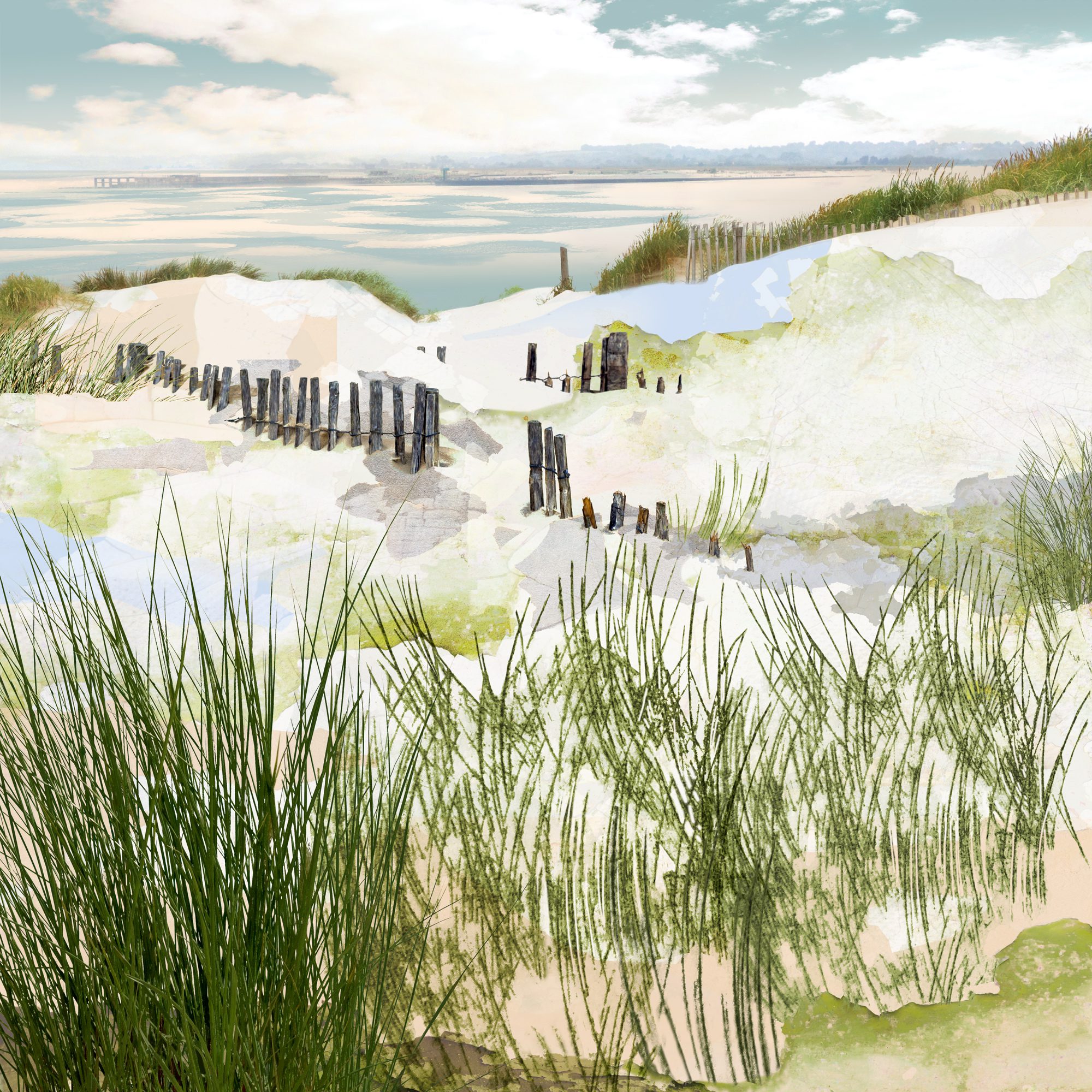


However I begin, the process always comes back to curiosity about what might happen next.
Digital Photomontage Is More Than Pressing a Button
I have sometimes felt that people regard photomontage as painting’s poor relation.
Perhaps that happens because creating an image digitally can look deceptively simple from the outside. The rise of AI-generated imagery has complicated this perception even further, reinforcing the idea that finished images can appear almost instantly.
My experience is very different.
Creating a digital photomontage takes time. I spend hours cutting out, looking, moving, removing, adding and reconsidering. I constantly make small adjustments and then step back to see what has changed. There isn’t a single button that can make those decisions for me. Instead, the artwork develops through hundreds of small choices.
Sometimes, I don’t even know exactly what I am searching for.
What Am I Searching For?
I do know, however, what I want the finished image to make me feel.
I am looking for a sense of peace within the image; a place I could imagine staying for a while. Perhaps that place reflects something I need within myself. I have never felt particularly interested in creating stories within my work. Instead, I want to create a peaceful place where I can pause.
That feeling has become increasingly important to me. It influences the decisions I make as I move photographs around the screen and gradually build the image.
The Meditative Process of Making
The process of cutting out photographs and bringing them together feels almost meditative.
I can spend hours moving elements around and watching the image slowly change. Then, suddenly, something unexpected happens. An image might sit within another image in a way I hadn’t considered. An object might appear completely out of scale and suggest an entirely different possibility.
Alternatively, I might place an image behind another element and suddenly create a completely different sense of space.
These accidents can change the direction of the artwork completely.
When Accidents Change the Artwork
I could never have planned some of these discoveries.
That is one of the things I love most about digital photomontage. The process allows me to discover possibilities that I couldn’t have imagined before I started.
I begin with photographs from the real world. Then I cut parts of them out, rearrange them and gradually create somewhere new.
From Photograph to Fine Art Print
Eventually, this slow process transforms fragments of photographs into something completely different.
The original photographs become ingredients rather than finished images. I stop thinking about each photograph individually and start thinking about what happens when several images become one imagined place.
At this point, my interest in colour, texture and structure becomes particularly important.
My background in textiles also influences the way I look at surfaces and details. I’m constantly searching for relationships between shapes, textures and fragments of landscape.
When the Image Becomes a Place
I move things around, remove them, add something else and then look again.
Gradually, the digital photomontage begins to feel like a place rather than a collection of photographs.
That is the moment I know the artwork is starting to work.
The photographs have become something else. They are no longer separate fragments but part of an imagined landscape with its own atmosphere and sense of space.
Where Each Artwork Begins
There is no single formula for creating my contemporary photomontage prints. Whatever the starting point, I rarely know exactly where I will end up. As my Mum always told me “Every journey of a thousand miles begins with the first step” ( I think Lao Tzu also said it a few years before). None of these starting points is remarkable – soemtimes the trick is just to begin. That way you have someting to react to and develop.
Rather than seeing this uncertainty as a problem, I have learned to see it as an important part of my creative process. I don’t want to reproduce a place exactly as I found it. Instead, I want to create a new place from fragments of places I have experienced.
These are just some of the starting points I have explored. Each one has led somewhere I didn’t quite expect.
Somewhere quiet.
Somewhere reflective.
A place I could imagine staying for a while.
And that, for me, is where the excitement of digital photomontage begins.





I absolutely love your work, and have done so for years, since first seeing it on the Bircham Gallery’s website. I am in awe.
Thank you so much Lynsey – It’s so kind of you to leave that comment 🙂